Abstract
Translation
Recordings
Gold as guardian
Of ships and mothers
Closing
Back To Top
Abstract
The coastguard leads Beowulf and his entourage to Heorot.
Back To Top
Translation
"They went upon their way. The boat was bound,
the capacious craft tethered with cord,
secure at anchor. Boar-shapes shone
atop their cheek guards; ornamented gold,
glistening and firmament firm, securely held life:
war-hearted grim men. They all hurried onward,
going down together, until from that high hall of a building,
ornamented and gold-dappled for all to see
that it was foremost among humanity of all
the buildings beneath heaven, the ruler called for them;
light of the people over so great a land."
(Beowulf ll.301-311)
Back To Top
Recordings
Old English:
{Forthcoming}
Modern English:
{Forthcoming}
Back To Top
Gold as guardian
Gold is pretty prevalent in this passage. It'd be easy just to dismiss the metal's shining presence in the Geats' helmets and on Heorot as indicators of wealth and prestige, but I think there's more to it than that. Of course.
In both of these instances I think that the gold is present in the helmet and the hall as a ward against harm. Or maybe as an outward show of the value of the people under the helmets and in the hall.
Putting a monetary value on a life or a major injury isn't something modern. The Anglo-Saxons had a law covering the same thing that required the perpetrator to pay their victim (or, in the case of murder, the victim's next of kin) a fee called "wergild." The major purpose of this fee was to stem the outbreak of feuds and to bring disparate groups together into a group that extended beyond family ties.
It's a bit broad, but literally translated, "wergild" becomes "man price."
This is where this theory gets a little crazy, mostly because of timing issues. If the concept of we-gild had been around for a few generations before Beowulf was put together/originally written, then what would stop payments from becoming a preventative measure? Once it was so established, it's not much further to get to a point where the association of gold with prevention of harm takes on a magical or superstitious flavour.
With such perception of gold as a protective metal in the culture, it would make good sense for it to adorn helmet and horn alike. Thus, pointing out the gold in the helmets and in Heorot's exterior firmly establishes the protective properties of both.
However, in this passage, I think that a contrast is implied.
If gold is a metal that the Anglo-Saxons of Beowulf's time believed to have protective properties then it's already clear to the audience that it hasn't worked so well for Heorot. The mention of gold being in the Geats' helmets, then, calls into question just how effective they'll be in guarding their lives. It's also possible to read the failure of Heorot's golden exterior as evidence for Grendel's chaotic influence. His presence as a kin of Cain causes the proper function of gold to cease.
If all of this rang true for the poem's original audience, then it's hard to believe how much more anticipation there would have been for the fight once Beowulf reveals that he'll faced Grendel completely unarmed. Heck, you could even say that if all this is true and Grendel's power to negate weapons extends to negating the protective properties of gold, then Beowulf's facing him with his bare hands alone evens the field all the more.
Back To Top
Of ships and mothers
"Capacious" of line 302 is, in Old English, "wide-bosomed," or "sidfæþmed."
While a modern interpretation of "wide-bosomed" might be simply "large breasted," the two definitions of "sidfæþmed" suggest that the Anglo-Saxons regarded it as more a matter of volume than size. Considering that all children of the period were nursed, this is hardly surprising. The greater capacity a mother had for milk the more nourishment her child would get, giving that child a better chance to make it through childhood and come into healthy adolescence.
How that relates to a ship is beyond me, except for the idea that travelling in comfort is better than travelling in a cramped space. Plus, a boat with some room would make rowing much easier. Easier rowing means faster travel. So a capacious boat is definitely optimal.
Getting back to this passage in particular, what can be made of the repeat mentions of Beowulf's boat being securely tethered?
Running with the connection between mothers and boats via "sidfæþmed," and taking along for the jog the tradition of referring to boats with feminine pronouns, Beowulf's boat could be regarded as his anima being securely left behind, enabling him to act without sentiment, if necessary. If you want to take the Jungian tack.
Much more straightforward is the interpretation that Beowulf's ship is his only means of getting him back to his homeland. As such, its security is of the utmost importance.
Or, it could symbolize his identity as a true Geat. If he had no way of getting back home, his liege Hygelac could think him dead or gone native, erasing his status as outsider among the Danes and making him a quasi-exile.
Back To Top
Closing
Next week, the coastguard takes the Geats to Heorot's doors and then takes his leave.
Back To Top
Showing posts with label treasure. Show all posts
Showing posts with label treasure. Show all posts
Thursday, March 20, 2014

Thursday, August 8, 2013
Heorot's rise and fall (ll.74-85) [Old English]
Abstract
Translation
Recordings
Self sabotage and suspense
Heorot and Hubris
Closing
Back To Top
Abstract
Heorot is raised, named, and has its end prophesied.
Back To Top
Translation
Then heard I that work a summons went widely,
to many peoples from throughout this earth,
to adorn that dwelling place. After their first meeting,
immediately amidst those assembled, it was made ready,
the greatest of all halls; the poets named it Heorot,
he whose word has widespread influence.
That boast did not lie, rings were doled out,
a continuous treasure flow. That hall rose high,
towering and wide-gabled, made to resist fierce fire,
loathe of lightning; yet it was not as such for long,
since woken sword-hate would later swallow it
after war broke out between son in law and father in law.
(Beowulf ll.74-85)
Back To Top
Recordings
Old English:
{Forthcoming}
Modern English:
{Forthcoming}
Back To Top
Self sabotage and suspense
For an epic poem, Beowulf has some moments where it seems to sabotage its own scope. At least on the surface. This excerpt is a prime example of such apparent sabotage, as it takes the grand idea of the world's greatest mead hall and condenses its history into just over 10 lines.
But there's some purpose behind doing things this way.
In speaking of the end of Heorot, the poet gives it a finite existence. On the one hand doing so could be the poetical version of the mistakes that artisans would make in their intricate weavings and carvings so as to not offend what they believed to be god's perfect creation. On the other, it lets readers know that Heorot will not be destroyed until the time that is appointed.
To the poem's original audience (maybe even in its written version) the reference to a feud erupting between father in law and son in law could actually be meaningful; including this detail could root this story further in history. The poet alludes to something real and gives it enough detail to frame it as the real thing. Then he is free to embellish Heorot's history with the wild story of Beowulf and Grendel.
From a purely narrative standpoint, delineating Heorot's existence like this also lets the reader know that Grendel isn't the one to destroy Heorot. Once more, on the surface this seems like self sabotage. However, this moment in the poem doesn't undercut the suspense of Beowulf's struggle with Grendel, it strengthens it. An attentive reader knows that Beowulf must succeed for Heorot to survive to be destroyed in the manner described here. What generates much of the suspense during the lead up to and during his fight with Grendel is the question of how he does it.
Back To Top
Heorot and Hubris
Continuing in that vein, Heorot sounds like a classic embodiment of hubris. Not only is it a grand building where great treasures are doled out, it's also built "to resist fierce fire,/loathe of lightning" ("heaðowylma bad,/laðan liges" (ll.82-83)). Its very construction is supposed to negate the natural things that are the banes of other buildings. So it sounds like something that by its nature is calling down the anger of the gods.
Yet, aside from drawing it out of a classically informed narrative analysis placed onto the poem, it's hard to tell if the Anglo-Saxons themselves saw things this way. This sense of hubris that I'm pulling out of the poem could even be a subtle insertion on the part of the Christian scribe who put Beowulf to paper, something to show the wrong-headedness of the Anglo-Saxons before the missions came and all of that.
Regardless, Heorot's description is definitely something over the top. And if that's something that calls down the attention of the gods, then maybe it would foreshadow some sort of supernatural intervention for the poem's early audiences. Perhaps then, the reference to the hall's being destroyed in a feud is meant to turn readers' suspicions away from the supernatural. Grendel still has to be introduced, after all.
Back To Top
Closing
Next week, in fact, Grendel gets introduced. And the context of this introduction sets up quite the contrast.
Back To Top
Translation
Recordings
Self sabotage and suspense
Heorot and Hubris
Closing
Back To Top
Abstract
Heorot is raised, named, and has its end prophesied.
Back To Top
Translation
Then heard I that work a summons went widely,
to many peoples from throughout this earth,
to adorn that dwelling place. After their first meeting,
immediately amidst those assembled, it was made ready,
the greatest of all halls; the poets named it Heorot,
he whose word has widespread influence.
That boast did not lie, rings were doled out,
a continuous treasure flow. That hall rose high,
towering and wide-gabled, made to resist fierce fire,
loathe of lightning; yet it was not as such for long,
since woken sword-hate would later swallow it
after war broke out between son in law and father in law.
(Beowulf ll.74-85)
Back To Top
Recordings
Old English:
{Forthcoming}
Modern English:
{Forthcoming}
Back To Top
Self sabotage and suspense
For an epic poem, Beowulf has some moments where it seems to sabotage its own scope. At least on the surface. This excerpt is a prime example of such apparent sabotage, as it takes the grand idea of the world's greatest mead hall and condenses its history into just over 10 lines.
But there's some purpose behind doing things this way.
In speaking of the end of Heorot, the poet gives it a finite existence. On the one hand doing so could be the poetical version of the mistakes that artisans would make in their intricate weavings and carvings so as to not offend what they believed to be god's perfect creation. On the other, it lets readers know that Heorot will not be destroyed until the time that is appointed.
To the poem's original audience (maybe even in its written version) the reference to a feud erupting between father in law and son in law could actually be meaningful; including this detail could root this story further in history. The poet alludes to something real and gives it enough detail to frame it as the real thing. Then he is free to embellish Heorot's history with the wild story of Beowulf and Grendel.
From a purely narrative standpoint, delineating Heorot's existence like this also lets the reader know that Grendel isn't the one to destroy Heorot. Once more, on the surface this seems like self sabotage. However, this moment in the poem doesn't undercut the suspense of Beowulf's struggle with Grendel, it strengthens it. An attentive reader knows that Beowulf must succeed for Heorot to survive to be destroyed in the manner described here. What generates much of the suspense during the lead up to and during his fight with Grendel is the question of how he does it.
Back To Top
Heorot and Hubris
Continuing in that vein, Heorot sounds like a classic embodiment of hubris. Not only is it a grand building where great treasures are doled out, it's also built "to resist fierce fire,/loathe of lightning" ("heaðowylma bad,/laðan liges" (ll.82-83)). Its very construction is supposed to negate the natural things that are the banes of other buildings. So it sounds like something that by its nature is calling down the anger of the gods.
Yet, aside from drawing it out of a classically informed narrative analysis placed onto the poem, it's hard to tell if the Anglo-Saxons themselves saw things this way. This sense of hubris that I'm pulling out of the poem could even be a subtle insertion on the part of the Christian scribe who put Beowulf to paper, something to show the wrong-headedness of the Anglo-Saxons before the missions came and all of that.
Regardless, Heorot's description is definitely something over the top. And if that's something that calls down the attention of the gods, then maybe it would foreshadow some sort of supernatural intervention for the poem's early audiences. Perhaps then, the reference to the hall's being destroyed in a feud is meant to turn readers' suspicions away from the supernatural. Grendel still has to be introduced, after all.
Back To Top
Closing
Next week, in fact, Grendel gets introduced. And the context of this introduction sets up quite the contrast.
Back To Top
Thursday, July 4, 2013
Gilding the greats (ll.43-52) [Old English]
Abstract
Translation
Recordings
Homeward bound Scyld?
Imposing a word and why
Closing
Back To Top
Abstract
Scyld is sent off with his boat of treasure as his living comrades are plagued by heavy hearts.
Back To Top
Translation
"By no means did they leave a lack of gifts,
treasures of the people, when that was done,
when they sent him forth to his origin,
for he was one who came over the waves as a child.
Then they established a golden sign for him
high overhead, they let the waves bear him,
their gift to the raging ocean; they were
sorrowful at heart, mourning souls. Men cannot
say for certain, hall rulers,
heroes under heaven, who that horde discovered."
(Beowulf ll.43-52)
Back To Top
Recordings
Old English:
{Forthcoming}
Modern English:
{Forthcoming}
Back To Top
Homeward bound Scyld?
Initially, it's tempting to say that the first sentence of this excerpt is very familiar. Not in that everyone sends their dead out to sea laden with treasure, but in that 'going to see your maker' is a fairly popular euphemism for death. However, as the sentence ends we get an extra layer is added to Scyld's story.
Like so many other "chosen heroes" (or figures like them), it's revealed that Scyld's origins are shrouded in mystery. On one hand this is definitely a trope, but considering the patriarchal society in which Beowulf was composed/sung, it's also a curious quality in a great leader.
If there's one thing that's important in Anglo-Saxon society it's a person's connection to their lineage and heritage. Later in the poem, when Beowulf appears before Hrothgar, there's no question that Hrothgar's helping Beowulf's father in the past goes far in getting Hrothgar to feel secure in entrusting Heorot to the travelling Geat. Scyld's lack of any connection, since he's an orphan from across the sea, makes his rise to power all the more impressive.
Though, it's not out outlandish to guess that having no earthly origin might have as much clout as regal or warrior origins would. After all, a leader's story and reputation could be as powerful as any army - having such mysterious origins could only bolster such power. So long as they were properly maintained.
Back To Top
Imposing a word and why
Though there's no connection between the hoard sent out with Scylde and that of the dragon later in the poem, I've chosen to suggest one. This centers around the word "hlæste" (l.52).
Commonly, this word means "burden," "load," or "freight," but I went with "hoard." It's true that the treasure is the boat's freight, with the implication that Scyld is as much a treasure as the glittering armour or piled gold, but "hoard" doesn't subtract from this implication. Thus, it's a variant translation, but still a valid one.
For, using "hoard" associates Scyld with the treasure that has been sent off in the same way as the more common translations of "hlæste." It's possible that Anglo-Saxons might regard "hoard" as more negative in its connotations, though. Hoarding treasure means that it isn't shared, and unshared treasure is more often than not the undoing of a ruler.
Actually, this raises a curious point. In the person of Scyld literal treasure and a valued figure are joined into one thing; both of them become regarded as treasure. Then, later in the poem, we get the stories of Heremod (who hoarded his treasure, much to the dissatisfaction of his thanes), and of Modthryth (who hoarded her beauty to herself, and punished men simply for looking at her). So, after a great person has been gilded we then see examples of the extreme opposites - a man who refuses to share his treasure in an expected way and a woman who refuses to share her person in an expected way (as skeezy as that might sound).
This establishing of the true value of a great man and then its deconstruction makes for a grand set up for the end of the poem. After all, the tension between valued figures and valued things is resolved in Beowulf's death and funeral.
Like Scyld he is buried with a great deal of treasure, and like Scyld he is a greatly valued figure among his people. The major difference - Beowulf's being buried rather than set off to sea - does two things. It gives closure for the poem, but it's a much more definitive kind of closure since Beowulf returns to the dust of his home rather than mere dust in general.
Back To Top
Closing
Next week, the focus returns to Beow, and we hear the first mention of Hrothgar.
Subscribe to this blog's feed to be notified of updates as they happen!
Back To Top
Translation
Recordings
Homeward bound Scyld?
Imposing a word and why
Closing
Back To Top
Abstract
Scyld is sent off with his boat of treasure as his living comrades are plagued by heavy hearts.
Back To Top
Translation
"By no means did they leave a lack of gifts,
treasures of the people, when that was done,
when they sent him forth to his origin,
for he was one who came over the waves as a child.
Then they established a golden sign for him
high overhead, they let the waves bear him,
their gift to the raging ocean; they were
sorrowful at heart, mourning souls. Men cannot
say for certain, hall rulers,
heroes under heaven, who that horde discovered."
(Beowulf ll.43-52)
Back To Top
Recordings
Old English:
{Forthcoming}
Modern English:
{Forthcoming}
Back To Top
Homeward bound Scyld?
Initially, it's tempting to say that the first sentence of this excerpt is very familiar. Not in that everyone sends their dead out to sea laden with treasure, but in that 'going to see your maker' is a fairly popular euphemism for death. However, as the sentence ends we get an extra layer is added to Scyld's story.
Like so many other "chosen heroes" (or figures like them), it's revealed that Scyld's origins are shrouded in mystery. On one hand this is definitely a trope, but considering the patriarchal society in which Beowulf was composed/sung, it's also a curious quality in a great leader.
If there's one thing that's important in Anglo-Saxon society it's a person's connection to their lineage and heritage. Later in the poem, when Beowulf appears before Hrothgar, there's no question that Hrothgar's helping Beowulf's father in the past goes far in getting Hrothgar to feel secure in entrusting Heorot to the travelling Geat. Scyld's lack of any connection, since he's an orphan from across the sea, makes his rise to power all the more impressive.
Though, it's not out outlandish to guess that having no earthly origin might have as much clout as regal or warrior origins would. After all, a leader's story and reputation could be as powerful as any army - having such mysterious origins could only bolster such power. So long as they were properly maintained.
Back To Top
Imposing a word and why
Though there's no connection between the hoard sent out with Scylde and that of the dragon later in the poem, I've chosen to suggest one. This centers around the word "hlæste" (l.52).
Commonly, this word means "burden," "load," or "freight," but I went with "hoard." It's true that the treasure is the boat's freight, with the implication that Scyld is as much a treasure as the glittering armour or piled gold, but "hoard" doesn't subtract from this implication. Thus, it's a variant translation, but still a valid one.
For, using "hoard" associates Scyld with the treasure that has been sent off in the same way as the more common translations of "hlæste." It's possible that Anglo-Saxons might regard "hoard" as more negative in its connotations, though. Hoarding treasure means that it isn't shared, and unshared treasure is more often than not the undoing of a ruler.
Actually, this raises a curious point. In the person of Scyld literal treasure and a valued figure are joined into one thing; both of them become regarded as treasure. Then, later in the poem, we get the stories of Heremod (who hoarded his treasure, much to the dissatisfaction of his thanes), and of Modthryth (who hoarded her beauty to herself, and punished men simply for looking at her). So, after a great person has been gilded we then see examples of the extreme opposites - a man who refuses to share his treasure in an expected way and a woman who refuses to share her person in an expected way (as skeezy as that might sound).
This establishing of the true value of a great man and then its deconstruction makes for a grand set up for the end of the poem. After all, the tension between valued figures and valued things is resolved in Beowulf's death and funeral.
Like Scyld he is buried with a great deal of treasure, and like Scyld he is a greatly valued figure among his people. The major difference - Beowulf's being buried rather than set off to sea - does two things. It gives closure for the poem, but it's a much more definitive kind of closure since Beowulf returns to the dust of his home rather than mere dust in general.
Back To Top
Closing
Next week, the focus returns to Beow, and we hear the first mention of Hrothgar.
Subscribe to this blog's feed to be notified of updates as they happen!
Back To Top
Thursday, June 27, 2013
A funeral ship and far foreign lands (ll.32-42) [Old English]
Abstract
Translation
Recordings
The matter of the treasure ship
Far away may as well be undiscovered
Closing
Back To Top
Abstract
Scyld's funeral procession and the description of his final ship feature this week.
Back To Top
Translation
"There at the landing place stood a ring-prowed ship
icy and eager to start, ready for that nobleman's passage;
the dear lords lead him to
the brightly ringed wealth ship,
treasure filled it to the mast; there was plentiful loot
from foreign lands, booty, loaded into it.
Never heard I of a more splendidly adorned ship
war-ready and armoured,
blade and byrnie; upon his lap was lain
a multifarious fortune, among which
he was to go to far foreign lands."
(Beowulf ll.32-42)
Back To Top
Recordings
Old English:
{Forthcoming}
Modern English:
{Forthcoming}
Back To Top
The matter of the treasure ship
Scyld's ship would make a cracking archaeological find. All of that treasure, some of which coming from foreign lands, would have so much to say about the range of the early medieval Danes (and maybe Anglo-Saxons?).
Outside of such a find, though, the big thing here is that the ship is characterized as "icy" ("isig" l.33).
What would the use of an icy ship be?
Would it more effectively cut through the water?
Or is it supposed to mean that it's an old ship, one that's been so covered with hoarfrost from travelling in the chill north that it's become discoloured? Maybe barnacled?
The safest bet is that it's an old ship. It'd be one thing to use a new one for a Viking burial, but it'd be something else entirely to use a new ship and to laden it with so much treasure.
Speaking of which, aside from the immense wealth on board, the time is taken to mention that the ship is "war-ready and armoured" ("hildewæpnum ond heaðowædum" l.39). Beliefs in some sort of struggle that one must go through to get to the afterlife are fairly common around this time, and they may have coupled with ideas traditionally ascribed to the Norse. Particularly, I refer to the Norse idea that only those who go to death armed will be able to join the ranks of Valhalla. Perhaps there's also some of the Celtic belief that the afterlife is another life similar to the one in which readers of this entry find themselves.
Whatever the case, Scyld could very easily buy a king out of ransom, and fend off a horde of demons on his way to the "far foreign lands" ("æht feor" l.42).
Back To Top
Far away may as well be undiscovered
Is the "far foreign land" of line 42 a predecessor to Shakespeare's "he undiscover'd country" (from 3.i.81)? Outside of going into a lengthy historical/literary analysis, let's just look at the two lines within the context of internet writing.
One tips for writing for the internet found in many books/articles/heads of experts is to use Anglo-Saxon words, rather than Latinate or Greek-derived words. It's supposed to be best to use words that have been in English since the days of the Beowulf bard(s). Keeping this in mind, and remembering that the key here is simplicity maintaining itself throughout history, "the foreign country" as a euphemism for death should have some staying power.
After all, in the days when travel between points was difficult and most people stayed where they were born, anything outside of the village and its surroundings would seem distant and hard to reach. This difficulty of travelling abroad persisted from the time of Beowulf's composition (whether you peg it in the 7th or 11th century), to the time of Shakespeare (despite theories about his own wide travelling). With travel abroad being so difficult, round trips were even more so, and thus travelling to a "far foreign" land would mean a person may as well be dead - or vice versa.
Thus, though Shakespeare probably never read Beowulf, the sentiment of his "undiscover'd country," and of Beowulf's "far foreign land" is undoubtedly the same.
Back To Top
Closing
That's it for this week. Recordings continue to be delayed, in fact, at this point the "Recording" section of each entry will continue to be included, but they will be filled only when I can find the time.
Next week, we get into part two of Scyld's funeral, in which his body and its adornments are described.
Back To Top
Translation
Recordings
The matter of the treasure ship
Far away may as well be undiscovered
Closing
Back To Top
Abstract
Scyld's funeral procession and the description of his final ship feature this week.
Back To Top
Translation
"There at the landing place stood a ring-prowed ship
icy and eager to start, ready for that nobleman's passage;
the dear lords lead him to
the brightly ringed wealth ship,
treasure filled it to the mast; there was plentiful loot
from foreign lands, booty, loaded into it.
Never heard I of a more splendidly adorned ship
war-ready and armoured,
blade and byrnie; upon his lap was lain
a multifarious fortune, among which
he was to go to far foreign lands."
(Beowulf ll.32-42)
Back To Top
Recordings
Old English:
{Forthcoming}
Modern English:
{Forthcoming}
Back To Top
The matter of the treasure ship
Scyld's ship would make a cracking archaeological find. All of that treasure, some of which coming from foreign lands, would have so much to say about the range of the early medieval Danes (and maybe Anglo-Saxons?).
Outside of such a find, though, the big thing here is that the ship is characterized as "icy" ("isig" l.33).
What would the use of an icy ship be?
Would it more effectively cut through the water?
Or is it supposed to mean that it's an old ship, one that's been so covered with hoarfrost from travelling in the chill north that it's become discoloured? Maybe barnacled?
The safest bet is that it's an old ship. It'd be one thing to use a new one for a Viking burial, but it'd be something else entirely to use a new ship and to laden it with so much treasure.
Speaking of which, aside from the immense wealth on board, the time is taken to mention that the ship is "war-ready and armoured" ("hildewæpnum ond heaðowædum" l.39). Beliefs in some sort of struggle that one must go through to get to the afterlife are fairly common around this time, and they may have coupled with ideas traditionally ascribed to the Norse. Particularly, I refer to the Norse idea that only those who go to death armed will be able to join the ranks of Valhalla. Perhaps there's also some of the Celtic belief that the afterlife is another life similar to the one in which readers of this entry find themselves.
Whatever the case, Scyld could very easily buy a king out of ransom, and fend off a horde of demons on his way to the "far foreign lands" ("æht feor" l.42).
Back To Top
Far away may as well be undiscovered
Is the "far foreign land" of line 42 a predecessor to Shakespeare's "he undiscover'd country" (from 3.i.81)? Outside of going into a lengthy historical/literary analysis, let's just look at the two lines within the context of internet writing.
One tips for writing for the internet found in many books/articles/heads of experts is to use Anglo-Saxon words, rather than Latinate or Greek-derived words. It's supposed to be best to use words that have been in English since the days of the Beowulf bard(s). Keeping this in mind, and remembering that the key here is simplicity maintaining itself throughout history, "the foreign country" as a euphemism for death should have some staying power.
After all, in the days when travel between points was difficult and most people stayed where they were born, anything outside of the village and its surroundings would seem distant and hard to reach. This difficulty of travelling abroad persisted from the time of Beowulf's composition (whether you peg it in the 7th or 11th century), to the time of Shakespeare (despite theories about his own wide travelling). With travel abroad being so difficult, round trips were even more so, and thus travelling to a "far foreign" land would mean a person may as well be dead - or vice versa.
Thus, though Shakespeare probably never read Beowulf, the sentiment of his "undiscover'd country," and of Beowulf's "far foreign land" is undoubtedly the same.
Back To Top
Closing
That's it for this week. Recordings continue to be delayed, in fact, at this point the "Recording" section of each entry will continue to be included, but they will be filled only when I can find the time.
Next week, we get into part two of Scyld's funeral, in which his body and its adornments are described.
Back To Top
Thursday, June 6, 2013
Back to the Beginning of the Woven Ring (ll.1-11) [Old English]
Abstract
Translation
Recordings
A Turn of Fate
Setting a Tight Sequential Tone
Closing
Back To Top
Abstract
The poem begins on a rollicking note, as the poet recalls the glory of Scyld Scefing.
Back To Top
Translation
"What! We Spear-Danes had heard in days of yore
of the power of the king of a people,
how heroes accomplished valorous deeds.
Often did Scyld Scefing take away
the mead benches from troops of enemies,
terrified the Erola, afterwards that first was found
to become destitute; for that he experienced solace
grew up under a cloud, his honour prospered,
until each surrounding people from over
the whale road paid obeisance,
gave tribute: that was a good king!"
(Beowulf ll.1-11)
Back To Top
Recordings
Currently (as of 6 June), everything has been recorded and needs only to be edited. Over the next two weeks, these will be edited and uploaded to this blog. Meanwhile, watch for what I have recorded on YouTube!
Old English:
{Forthcoming}
Modern English:
{Forthcoming}
Back To Top
A Turn of Fate
Right in the middle of this excerpt, there's a marked turn.
The poet notes that "the first was found/to become destitute" ("Syððan ærest wearð/feasceaft funden" (ll.6-7)). Rather than just saying that Scyld Scefing became prosperous, the time is taken to note that the powerful that he tore down were torn down before his rise is solidly mentioned in line 7.
This sequencing of events underlines, very early on, the importance of sequence in the Anglo-Saxon world. It also gives some insight into kingship and the belief in something like fortune's wheel. Only one person can be a powerful king at any given time, and only on can be on the top of the wheel in any given arena at one time. It just so happened that Scyld was at the top of both at the same time.
Back To Top
Setting a Tight Sequential Tone
That the poet makes a note of this power shift also sets the tone of the poem. It will be a story of changing fortunes, but it will be one in which there is no vacuum left for things to be pulled into. There will always be some definite succession of events, something will always happen at the end of something else.
Already, we've seen this in the death of Beowulf. The Geats lost a leader, and they will definitely be wiped out since they have none to replace Beowulf. Meanwhile the surrounding tribes will shortly be upon them.
In a sense, the open-endedness that we are left with at the end of the poem promises something that may have been considered a fate worse than death: exile. Scyld might have stolen mead benches, what people would recline on while enjoying themselves and socializing, but exile means that a person would have no mead bench at all - none to even win back.
Back To Top
Closing
Next week, a batch of recordings will have been uploaded to this blog, and we'll move onto Scefing's further deeds.
Back To Top
Translation
Recordings
A Turn of Fate
Setting a Tight Sequential Tone
Closing
Back To Top
Abstract
The poem begins on a rollicking note, as the poet recalls the glory of Scyld Scefing.
Back To Top
Translation
"What! We Spear-Danes had heard in days of yore
of the power of the king of a people,
how heroes accomplished valorous deeds.
Often did Scyld Scefing take away
the mead benches from troops of enemies,
terrified the Erola, afterwards that first was found
to become destitute; for that he experienced solace
grew up under a cloud, his honour prospered,
until each surrounding people from over
the whale road paid obeisance,
gave tribute: that was a good king!"
(Beowulf ll.1-11)
Back To Top
Recordings
Currently (as of 6 June), everything has been recorded and needs only to be edited. Over the next two weeks, these will be edited and uploaded to this blog. Meanwhile, watch for what I have recorded on YouTube!
Old English:
{Forthcoming}
Modern English:
{Forthcoming}
Back To Top
A Turn of Fate
Right in the middle of this excerpt, there's a marked turn.
The poet notes that "the first was found/to become destitute" ("Syððan ærest wearð/feasceaft funden" (ll.6-7)). Rather than just saying that Scyld Scefing became prosperous, the time is taken to note that the powerful that he tore down were torn down before his rise is solidly mentioned in line 7.
This sequencing of events underlines, very early on, the importance of sequence in the Anglo-Saxon world. It also gives some insight into kingship and the belief in something like fortune's wheel. Only one person can be a powerful king at any given time, and only on can be on the top of the wheel in any given arena at one time. It just so happened that Scyld was at the top of both at the same time.
Back To Top
Setting a Tight Sequential Tone
That the poet makes a note of this power shift also sets the tone of the poem. It will be a story of changing fortunes, but it will be one in which there is no vacuum left for things to be pulled into. There will always be some definite succession of events, something will always happen at the end of something else.
Already, we've seen this in the death of Beowulf. The Geats lost a leader, and they will definitely be wiped out since they have none to replace Beowulf. Meanwhile the surrounding tribes will shortly be upon them.
In a sense, the open-endedness that we are left with at the end of the poem promises something that may have been considered a fate worse than death: exile. Scyld might have stolen mead benches, what people would recline on while enjoying themselves and socializing, but exile means that a person would have no mead bench at all - none to even win back.
Back To Top
Closing
Next week, a batch of recordings will have been uploaded to this blog, and we'll move onto Scefing's further deeds.
Back To Top
Thursday, May 16, 2013
The Gold That was Buried with the Geat (ll.3163-3172) [Old English]
Abstract
Translation
Recordings
An Empty Victory
Beowulf's Courage
Closing
Back To Top
Abstract
Beowulf is buried, and the dragon's hoard with him. As part of the burial, twelve warriors ride around his barrow, lamenting all the while.
Back To Top
Translation
"They placed him in the barrow with rings and jewels,
all such adornments as were before in the
hoard of the hostile minded one that men had taken.
The warriors left the wealth to be kept by the earth,
gold in the ground, where it yet exists
as useless to men as it previously had been.
Then around the barrow of the brave in battle they rode,
the sons of noblemen, twelve warriors,
they would lament with their sorrow and mourn their king,
uttering dirges and speaking about the man;"
(Beowulf ll.3163-3172)
Back To Top
Recordings
Old English:
{Forthcoming}
Modern English:
{Forthcoming}
Back To Top
An Empty Victory
Beowulf's victory over the dragon was glorious, but it was ultimately useless. He died in the process,and he left his people unprotected against the ire of their rivals. But had he left the dragon to its devices,it would have destroyed the Geats. Why not just return the cup? Because the dragon was awoken, and the implication is that it was already too late by the time the serpent struck. Beowulf had lost his chance to truly protect his people by keeping a cooler head around that slave - if it was his slave to even begin with.
But back to the emptiness of Beowulf's accomplishment. In the old songs Sigurd slays the dragon and he becomes a great hero as a result. Though his household also collapses by the end of that story (at least in the forms of it that we still have it today). The important difference, though, is that Beowulf has no period of glory afterwards.
He's left mortally wounded by the fight with the dragon, and all he can do is bequeath his gear to Wiglaf and ask to see the treasure he gave his life for. Given the Christian bent of the written poem, could such a shortened life after so glorious an accomplishment be considered a mercy?
Could that be the secret of the dragon fight's relation to the story of Sigurd told after Beowulf beats Grendel? Perhaps Beowulf's shortened life is supposed to stand for the salvation that he finds, while Sigurd has no heaven to go to and thus is forced to roam onward.
Back To Top
Beowulf's Courage
In spite of the futility of Beowulf's final act, what the Geats celebrate at his death is his courage. This is a quality still admired in people, though modern ideals of courage have perhaps come quite far from early medieval notions of the concept. Or perhaps not.
The courageous deeds of Beowulf that are sung of in Beowulf are all examples of active courage.
This is the sort of courage that comes out when people face head on demons and monsters and great evil. However, this certainly couldn't be the extent of Beowulf's courage. He couldn't possibly have been on every battlefield, fighting every foe of the Geats and sparking the feuds that now threaten the leaderless people.
In some instances, Beowulf's reputation must have preceded him, and this emanation of his force must have been enough to bring some peoples to heel. After all, could a king who constantly brings his people to war be considered a good king? With the poem's examples of bad rulers (Heremod and Modthryth) in mind, it seems like such an action would be seen as merely selfish, and not really for the greater good of a people at all.
If Beowulf's courage created a reputation that itself protected the Geats and was maintained by Beowulf, it's possible to speak of his courage in more modern terms. So long as you consider the modern conception of courage to be knowing when to act and when to wait and being able to do which is needed. And, in that sense, that sort of courage could be one of the aspects of a "god cyning."
Back To Top
Closing
Next week we look at the final lines of the poem. Beowulf's burial is complete, and the final words about the great Geatish hero are spoken.
Back To Top
Translation
Recordings
An Empty Victory
Beowulf's Courage
Closing
Back To Top
Abstract
Beowulf is buried, and the dragon's hoard with him. As part of the burial, twelve warriors ride around his barrow, lamenting all the while.
Back To Top
Translation
"They placed him in the barrow with rings and jewels,
all such adornments as were before in the
hoard of the hostile minded one that men had taken.
The warriors left the wealth to be kept by the earth,
gold in the ground, where it yet exists
as useless to men as it previously had been.
Then around the barrow of the brave in battle they rode,
the sons of noblemen, twelve warriors,
they would lament with their sorrow and mourn their king,
uttering dirges and speaking about the man;"
(Beowulf ll.3163-3172)
Back To Top
Recordings
Old English:
{Forthcoming}
Modern English:
{Forthcoming}
Back To Top
An Empty Victory
Beowulf's victory over the dragon was glorious, but it was ultimately useless. He died in the process,and he left his people unprotected against the ire of their rivals. But had he left the dragon to its devices,it would have destroyed the Geats. Why not just return the cup? Because the dragon was awoken, and the implication is that it was already too late by the time the serpent struck. Beowulf had lost his chance to truly protect his people by keeping a cooler head around that slave - if it was his slave to even begin with.
But back to the emptiness of Beowulf's accomplishment. In the old songs Sigurd slays the dragon and he becomes a great hero as a result. Though his household also collapses by the end of that story (at least in the forms of it that we still have it today). The important difference, though, is that Beowulf has no period of glory afterwards.
He's left mortally wounded by the fight with the dragon, and all he can do is bequeath his gear to Wiglaf and ask to see the treasure he gave his life for. Given the Christian bent of the written poem, could such a shortened life after so glorious an accomplishment be considered a mercy?
Could that be the secret of the dragon fight's relation to the story of Sigurd told after Beowulf beats Grendel? Perhaps Beowulf's shortened life is supposed to stand for the salvation that he finds, while Sigurd has no heaven to go to and thus is forced to roam onward.
Back To Top
Beowulf's Courage
In spite of the futility of Beowulf's final act, what the Geats celebrate at his death is his courage. This is a quality still admired in people, though modern ideals of courage have perhaps come quite far from early medieval notions of the concept. Or perhaps not.
The courageous deeds of Beowulf that are sung of in Beowulf are all examples of active courage.
This is the sort of courage that comes out when people face head on demons and monsters and great evil. However, this certainly couldn't be the extent of Beowulf's courage. He couldn't possibly have been on every battlefield, fighting every foe of the Geats and sparking the feuds that now threaten the leaderless people.
In some instances, Beowulf's reputation must have preceded him, and this emanation of his force must have been enough to bring some peoples to heel. After all, could a king who constantly brings his people to war be considered a good king? With the poem's examples of bad rulers (Heremod and Modthryth) in mind, it seems like such an action would be seen as merely selfish, and not really for the greater good of a people at all.
If Beowulf's courage created a reputation that itself protected the Geats and was maintained by Beowulf, it's possible to speak of his courage in more modern terms. So long as you consider the modern conception of courage to be knowing when to act and when to wait and being able to do which is needed. And, in that sense, that sort of courage could be one of the aspects of a "god cyning."
Back To Top
Closing
Next week we look at the final lines of the poem. Beowulf's burial is complete, and the final words about the great Geatish hero are spoken.
Back To Top
Thursday, April 11, 2013
Wiglaf Guides Geats to Gold (ll.3101-3109) [Old English]
Abstract
Translation
Recordings
Venturing into the Gold Vault
The Geats Choose Glory over Gold?
Closing
Back To Top
Abstract
Wiglaf invites the Geats to step into the hoard before they prepare for Beowulf's funeral.
Back To Top
Translation
"'Let us now hasten to another time,
to see and seek out the pile of finely worked jewels,
the wonder under the wall. I shall guide you,
that you shall look upon abundant
rings and broad gold near at hand. Then ready the bier,
swiftly prepare it where we come out,
and then ferry our lord,
beloved of men, to where he shall long
in the Ruler's protection remain.'"
(Beowulf ll.3101-3109)
Back To Top
Recordings
Old English:
{Forthcoming}
Modern English:
{Forthcoming}
Back To Top
Venturing into the Gold Vault
At the center of this passage, Wiglaf invites the gathered Geats to take a look at the treasure. His is a simple gesture, and perhaps what is to be done in the circumstances. But, why does he do it?
As Geats, the gold must be a strange thing. On the one hand the hoard is a vast treasure store full of ancient and shiny things - so it's any of their dreams come true. On the other, it has the potential to be one of the largest draws for the other nations that are likely to wipe them out.
Their currently being kingless is almost just the second largest draw in comparison, actually. The Geats are currently like a headless dragon, and the Swedes and the Franks and no doubt others are likely to be all too keen to take advantage of their vulnerability.
Which leads to either a flaw in the plan to bury the gold with Beowulf, or the final great (unintended) act of the fallen king.
Back To Top
The Geats Choose Glory over Gold?
The death of Beowulf isn't just a great blow to the Geats from a martial perspective, it's also left them crippled diplomatically. Without a king, there's no single representative for the people. Thus, without Beowulf, the Geats cannot be dealt with in an easy manner.
Yet, aside from honouring Beowulf by leaving the gold with him in his barrow, it seems that Wiglaf may have another reason for doing so. Or, at the least, another reason can be read out of the poet's doing so for the sake of a poetically parallel ending.
It's clear that Beowulf is greatly respected. It's likely even that, though they bear grudges against him, even the Geats' foreign enemies respect Beowulf to some degree. So, perhaps Wiglaf planned to bury Beowulf with the hoard with Beowulf as a kind of seal upon it. That is, in connecting the gold to the barrow of a respected warrior, it would become inviolate in the eyes of the honourable.
The question that comes up next, though, is why Wiglaf would want to preserve the hoard.
The Geats go in to take a look at it in this passage- who's to stop any of them from taking a coin, a sword - a cup? Perhaps the thief who did so and woke the dragon doing so is enough of a warning to them.
Perhaps, more importantly, Wiglaf knows the danger of greed (maybe he'd heard of Heremod?) and is well aware that the hoard could inspire such an end to the Geats? If so, maybe Wiglaf (and the Geats in general?) prefer to go out on a high note, lost to history because of the loss of a great leader.
Back To Top
Closing
Next week, Wiglaf apparently leaves the Geats to their own devices in the hoard, as he gives orders for the construction of Beowulf's funeral pyre.
Back To Top
Translation
Recordings
Venturing into the Gold Vault
The Geats Choose Glory over Gold?
Closing
Back To Top
Abstract
Wiglaf invites the Geats to step into the hoard before they prepare for Beowulf's funeral.
Back To Top
Translation
"'Let us now hasten to another time,
to see and seek out the pile of finely worked jewels,
the wonder under the wall. I shall guide you,
that you shall look upon abundant
rings and broad gold near at hand. Then ready the bier,
swiftly prepare it where we come out,
and then ferry our lord,
beloved of men, to where he shall long
in the Ruler's protection remain.'"
(Beowulf ll.3101-3109)
Back To Top
Recordings
Old English:
{Forthcoming}
Modern English:
{Forthcoming}
Back To Top
Venturing into the Gold Vault
At the center of this passage, Wiglaf invites the gathered Geats to take a look at the treasure. His is a simple gesture, and perhaps what is to be done in the circumstances. But, why does he do it?
As Geats, the gold must be a strange thing. On the one hand the hoard is a vast treasure store full of ancient and shiny things - so it's any of their dreams come true. On the other, it has the potential to be one of the largest draws for the other nations that are likely to wipe them out.
Their currently being kingless is almost just the second largest draw in comparison, actually. The Geats are currently like a headless dragon, and the Swedes and the Franks and no doubt others are likely to be all too keen to take advantage of their vulnerability.
Which leads to either a flaw in the plan to bury the gold with Beowulf, or the final great (unintended) act of the fallen king.
Back To Top
The Geats Choose Glory over Gold?
The death of Beowulf isn't just a great blow to the Geats from a martial perspective, it's also left them crippled diplomatically. Without a king, there's no single representative for the people. Thus, without Beowulf, the Geats cannot be dealt with in an easy manner.
Yet, aside from honouring Beowulf by leaving the gold with him in his barrow, it seems that Wiglaf may have another reason for doing so. Or, at the least, another reason can be read out of the poet's doing so for the sake of a poetically parallel ending.
It's clear that Beowulf is greatly respected. It's likely even that, though they bear grudges against him, even the Geats' foreign enemies respect Beowulf to some degree. So, perhaps Wiglaf planned to bury Beowulf with the hoard with Beowulf as a kind of seal upon it. That is, in connecting the gold to the barrow of a respected warrior, it would become inviolate in the eyes of the honourable.
The question that comes up next, though, is why Wiglaf would want to preserve the hoard.
The Geats go in to take a look at it in this passage- who's to stop any of them from taking a coin, a sword - a cup? Perhaps the thief who did so and woke the dragon doing so is enough of a warning to them.
Perhaps, more importantly, Wiglaf knows the danger of greed (maybe he'd heard of Heremod?) and is well aware that the hoard could inspire such an end to the Geats? If so, maybe Wiglaf (and the Geats in general?) prefer to go out on a high note, lost to history because of the loss of a great leader.
Back To Top
Closing
Next week, Wiglaf apparently leaves the Geats to their own devices in the hoard, as he gives orders for the construction of Beowulf's funeral pyre.
Back To Top
Saturday, April 6, 2013
Gold from the (Word) Hoard (ll.3087-3100) [Old English]
Abstract
Translation
Recordings
Golden Standards
Treasured Retellings
Closing
Back To Top
Abstract
Wiglaf relates how he gathered treasures from the hoard for Beowulf and what the warrior said to him in his grief.
Back To Top
Translation
"'I was in that place and looked over all that was there;
through that building of precious objects I had to clear a
path. Not at all in a friendly way was I granted passage
in the place under the mound. I in haste grasped
much in my hands of a mighty burden
of the hoarded treasures, out to here I carried it
away to my king. Alive was he yet,
wise and aware; a great many things
the old one said in grief, and ordered me to greet you,
ordered that you should build after the friendly lord's
deeds a lofty barrow there in the place of the pyre,
mighty and renowned, just as he among men was,
worthiest warrior widely throughout the earth,
while he could enjoy the wealth of a stronghold.'"
(Beowulf ll.3087-3100)
Back To Top
Recordings
Old English:
{Forthcoming}
Modern English:
{Forthcoming}
Back To Top
Treasured Retellings
Wiglaf's account of going into the hoard and then bringing some treasures back to Beowulf in his final moments is straightforward and simple. As far as the retellings of events from the poem within the poem go, it might also be the most honest. However, as with the retellings that come up earlier in the poem, Wiglaf elaborates on what the poet originally told us.
Wiglaf points out, among the other details of his time in the hoard, that he met an unfriendly welcome going through it. The first reaction to this statement, the first imagining, is that this is a way of saying how rich the hoard is: There's so much gold there that he had to wade through it to get to the things he took. But, bearing in mind the curse that the messenger mentioned earlier in the poem, maybe there's more to Wiglaf's addition than a comment on the hoard's wealth.
Since Wiglaf is not the saviour of the Geats that passage into the hoard would truly herald, he has to struggle through some sort of invisible barrier to get into it. Of course, seeing nothing there, he would mention nothing of such magic. Indeed, he'd likely have been overwhelmed by the sheer volume of gold and treasure in the hoard, and would later ascribe his difficulty to having to wade through piles of heirlooms.
Back To Top
Golden Standards
Along with his additions to the story he tells of the hoard, Wiglaf leaves out some details, as well. An obvious omission of his is of the things that he took from the hoard. As the poet noted between lines 73-75, he took some gold, cups, and a standard. The gold and cups are obvious choices. But the standard is a charged one.
First. whose standard was it? Why was it in the hoard? The answer to both is that it was the ancient people's, and that it was put there because that people died out.
Could there be some sort of Anglo-Saxon belief that stealing another group's standard without first besting them in battle?
Or does Wiglaf not mention it because he wants to keep himself blameless in the matter oft he Geats reaching the end of their time?
Back To Top
Closing
Next week, Wiglaf gives the Geats directions regarding Beowulf's funeral, after, of course, boastng a little more about the treasure in the hoard.
Back To Top
Translation
Recordings
Golden Standards
Treasured Retellings
Closing
Back To Top
Abstract
Wiglaf relates how he gathered treasures from the hoard for Beowulf and what the warrior said to him in his grief.
Back To Top
Translation
"'I was in that place and looked over all that was there;
through that building of precious objects I had to clear a
path. Not at all in a friendly way was I granted passage
in the place under the mound. I in haste grasped
much in my hands of a mighty burden
of the hoarded treasures, out to here I carried it
away to my king. Alive was he yet,
wise and aware; a great many things
the old one said in grief, and ordered me to greet you,
ordered that you should build after the friendly lord's
deeds a lofty barrow there in the place of the pyre,
mighty and renowned, just as he among men was,
worthiest warrior widely throughout the earth,
while he could enjoy the wealth of a stronghold.'"
(Beowulf ll.3087-3100)
Back To Top
Recordings
Old English:
{Forthcoming}
Modern English:
{Forthcoming}
Back To Top
Treasured Retellings
Wiglaf's account of going into the hoard and then bringing some treasures back to Beowulf in his final moments is straightforward and simple. As far as the retellings of events from the poem within the poem go, it might also be the most honest. However, as with the retellings that come up earlier in the poem, Wiglaf elaborates on what the poet originally told us.
Wiglaf points out, among the other details of his time in the hoard, that he met an unfriendly welcome going through it. The first reaction to this statement, the first imagining, is that this is a way of saying how rich the hoard is: There's so much gold there that he had to wade through it to get to the things he took. But, bearing in mind the curse that the messenger mentioned earlier in the poem, maybe there's more to Wiglaf's addition than a comment on the hoard's wealth.
Since Wiglaf is not the saviour of the Geats that passage into the hoard would truly herald, he has to struggle through some sort of invisible barrier to get into it. Of course, seeing nothing there, he would mention nothing of such magic. Indeed, he'd likely have been overwhelmed by the sheer volume of gold and treasure in the hoard, and would later ascribe his difficulty to having to wade through piles of heirlooms.
Back To Top
Golden Standards
Along with his additions to the story he tells of the hoard, Wiglaf leaves out some details, as well. An obvious omission of his is of the things that he took from the hoard. As the poet noted between lines 73-75, he took some gold, cups, and a standard. The gold and cups are obvious choices. But the standard is a charged one.
First. whose standard was it? Why was it in the hoard? The answer to both is that it was the ancient people's, and that it was put there because that people died out.
Could there be some sort of Anglo-Saxon belief that stealing another group's standard without first besting them in battle?
Or does Wiglaf not mention it because he wants to keep himself blameless in the matter oft he Geats reaching the end of their time?
Back To Top
Closing
Next week, Wiglaf gives the Geats directions regarding Beowulf's funeral, after, of course, boastng a little more about the treasure in the hoard.
Back To Top
Friday, March 8, 2013
The Ward on the Huge Hoard (ll.3047-3057) [Old English]
Abstract
Translation
Recordings
The Problem of Entering the Gold Hoard
A Big, Strong Word
Closing
Back To Top
Abstract
The poet reflects further on the dragon, and reveals some interesting facts about the serpent's hoard.
Back To Top
Translation
"Beside him stood beakers and cups,
plates laid about and dear swords,
rusty, eaten through, as only those who live
in the embrace of earth for a thousand winters
can be. Yet that huge cache,
the hold of gold of men of old, was spell-bound,
so that no man might enter
that ring-hall, save god itself,
Ruler of Triumph, give its approval
- for god is humanity's handler - to open that hoard,
even then only for such a man as god thought fit."
(Beowulf ll.3047-3057)
Back To Top
Recordings
Old English:
{Forthcoming}
Modern English:
{Forthcoming}
Back To Top
The Problem of Entering the Gold Hoard
Only someone with god's stamp of approval can enter the hoard.
Does that mean Wiglaf has god's approval? For he entered the hoard and saw its vast richness, reported it to Beowulf and showed a small fraction of it. The implications of such a thing are a little confusing though. If Wiglaf had god's approval, then why isn't he leading the Geats through the coming hardships? Why are they a people consigned to nothing more than utter annhilation?
The only really good reason I can come up with is that the poem's named Beowulf, not A History of the Geats, or the Geatilliad. Which begs the question: why would the Anglo-Saxons tell such an elegiac story? And why would it later be considered important enough to write down?
In considering the answer, the place of the elegy in Anglo-Saxon literature and narrative is incredibly important.
Quite possibly, the fall of the Geats did not happen in the way the poem describes, but has been accelerated for the sake of the form. Or maybe for the sake of the lesson. Though what the lesson of Beowulf is, is rather ambiguous. Its moral could be any number of things.
Christianity is the way to go?
Even the smallest transgression - something so tiny that you can only remember it as a vague feeling - can lead to your downfall?
Wyrd is cruel and unknowable?
The poem's a bit longer than your average fable, so narrowing it down to something concrete isn't quite so straightforward.
Back To Top
A Big, Strong Word
The difficulty of interpretation aside, the word used to describe the hoard, eacencraeftig, has a crystal clear meaning. Sure, it means "huge," but broken down into its component parts it means "augmented strength" ("eacen"+"craeftig").
Since it's used to describe the hoard, eacencraeftig clearly means immense or huge. The sense of the word's components together gives a similar affect, since physical strength has always been linked to physical size, and augmenting that strength means increasing that size. There isn't necessarily anything crafty about the word otherwise, but it's neat to know what little there is.
Back To Top
Closing
Next week the poet returns to the poem's namesake. Watch for it on Thursday!
Back To Top
Translation
Recordings
The Problem of Entering the Gold Hoard
A Big, Strong Word
Closing
Back To Top
Abstract
The poet reflects further on the dragon, and reveals some interesting facts about the serpent's hoard.
Back To Top
Translation
"Beside him stood beakers and cups,
plates laid about and dear swords,
rusty, eaten through, as only those who live
in the embrace of earth for a thousand winters
can be. Yet that huge cache,
the hold of gold of men of old, was spell-bound,
so that no man might enter
that ring-hall, save god itself,
Ruler of Triumph, give its approval
- for god is humanity's handler - to open that hoard,
even then only for such a man as god thought fit."
(Beowulf ll.3047-3057)
Back To Top
Recordings
Old English:
{Forthcoming}
Modern English:
{Forthcoming}
Back To Top
The Problem of Entering the Gold Hoard
Only someone with god's stamp of approval can enter the hoard.
Does that mean Wiglaf has god's approval? For he entered the hoard and saw its vast richness, reported it to Beowulf and showed a small fraction of it. The implications of such a thing are a little confusing though. If Wiglaf had god's approval, then why isn't he leading the Geats through the coming hardships? Why are they a people consigned to nothing more than utter annhilation?
The only really good reason I can come up with is that the poem's named Beowulf, not A History of the Geats, or the Geatilliad. Which begs the question: why would the Anglo-Saxons tell such an elegiac story? And why would it later be considered important enough to write down?
In considering the answer, the place of the elegy in Anglo-Saxon literature and narrative is incredibly important.
Quite possibly, the fall of the Geats did not happen in the way the poem describes, but has been accelerated for the sake of the form. Or maybe for the sake of the lesson. Though what the lesson of Beowulf is, is rather ambiguous. Its moral could be any number of things.
Christianity is the way to go?
Even the smallest transgression - something so tiny that you can only remember it as a vague feeling - can lead to your downfall?
Wyrd is cruel and unknowable?
The poem's a bit longer than your average fable, so narrowing it down to something concrete isn't quite so straightforward.
Back To Top
A Big, Strong Word
The difficulty of interpretation aside, the word used to describe the hoard, eacencraeftig, has a crystal clear meaning. Sure, it means "huge," but broken down into its component parts it means "augmented strength" ("eacen"+"craeftig").
Since it's used to describe the hoard, eacencraeftig clearly means immense or huge. The sense of the word's components together gives a similar affect, since physical strength has always been linked to physical size, and augmenting that strength means increasing that size. There isn't necessarily anything crafty about the word otherwise, but it's neat to know what little there is.
Back To Top
Closing
Next week the poet returns to the poem's namesake. Watch for it on Thursday!
Back To Top
Thursday, February 14, 2013
A Hot Forecast (ll.3010b-3021a) [Old English]
Abstract
Translation
Recordings
Anglo-Saxon Treasure Abuse
Walking without Memory
Closing
Back To Top
Abstract
The messenger makes his predictions regarding the fate of the Geats, and, more importantly, the fate of the treasure hoard.
Back To Top
Translation
"'None shall match
What will melt amidst his glory, for there shall be the
treasure's hoarded gold untold, bought at so grim a cost;
and now at his departure those rings bought
with his own life: they shall the fire consume,
all swallowed in the searing heat, no man shall
wear that treasure to remember, nor may
any woman wear those costly rings as shining adornment,
but they shall be sad-hearted, bereaved of gold,
for oft, not once alone, shall they tread foreign lands,
the leader's laughter now having been silenced,
sport and mirth ceased.'"
(Beowulf ll.3010b-3021a)
Back To Top
Recordings
Because of previous translating I'd done well before this blog and for various classes, just over 100 lines remain to work through. So, though it will create a substantial backlog, I'm not going to be posting recordings until my translation is finished. I'm also holding recordings back since I'm still working out posting all of them on YouTube.
Back To Top
Anglo-Saxon Treasure Abuse
Like all medieval prophecy and prognostication, this passage is dripping with sweet sweet meaning juice. In particular, there are two key things to focus on.
Melting down treasure seems to be antithetical to the way that most Anglo-Saxons think. Yet, here it's announced that the hoard will be heaped upon Beowulf's funeral pyre. The why might glare from the page at first, but, after this passage is read in full, the reasons are quite clear.
As an elegy, Beowulf simply can't end on too bright a note. Since this is the poem's ending, it's also important for the story to come to a definitive close.
Unfortunately, at least so far as we know, there was no sequel planned to tie up loose ends, and so that job fell to this poem itself. Having found so much treasure, how could it end any differently? Melting the treasure definitely seals up the story, since there is no treasure to transfer its unspoken curse from owner to owner.
After all, the mention of Fafnir, and the dragon Beowulf beats having a treasure hoard bring to mind the story of Ótr's gold and its curse. Or, for a more modern analogue, "mo money, mo problems." Cutting out that gold makes the Geats a much less appealing target.
Keeping the gold from being worn will also help the Geats move into the underground. Among the women, it would draw too much attention and make others think that they were available or willing to enter into marriages - which, though it could help the Geats in the long run.
Likewise, the men not wearing any of the treasure as a trophy or remembrance, effectively uproots the Geats, since early medieval peoples built themselves on the tradition and lore that came before them. To be stripped of their memories is tantamount to stripping them of their identity as a people.
Back To Top
Walking without Memory
On the other hand, losing communal memory (even of just their leader killing a dragon only to later die from his wounds) suits a life of communal exile. For exile cuts off the physical trappings of a western medieval society, whereas denying memory cuts off the psychological and emotional trappings of that society.
So pairing exile with the denial of memory is as damning as possible. Simply being told that you were exiled is shameful in itself, but knowing that you had nothing to go back to twists that knife.
Which makes me think that at least some audience of Beowulf (after it had been written down) was thinking along these lines. Hell, it makes me think that even the early audiences of Beowulf, those who heard a version close to what we have, would have sympathized with the Geats' losing land and memory.
After all, without a place you have no roots, and without memories of great deeds celebrated by the group you have no enduring communal spirit. With neither any great people becomes no more than the grass trod by wolves, the twigs used by crows, or the mice devoured by eagles.
Back To Top
Closing
Next week, the messenger brings out the beasts of battle!
Back To Top
Translation
Recordings
Anglo-Saxon Treasure Abuse
Walking without Memory
Closing
Back To Top
Abstract
The messenger makes his predictions regarding the fate of the Geats, and, more importantly, the fate of the treasure hoard.
Back To Top
Translation
"'None shall match
What will melt amidst his glory, for there shall be the
treasure's hoarded gold untold, bought at so grim a cost;
and now at his departure those rings bought
with his own life: they shall the fire consume,
all swallowed in the searing heat, no man shall
wear that treasure to remember, nor may
any woman wear those costly rings as shining adornment,
but they shall be sad-hearted, bereaved of gold,
for oft, not once alone, shall they tread foreign lands,
the leader's laughter now having been silenced,
sport and mirth ceased.'"
(Beowulf ll.3010b-3021a)
Back To Top
Recordings
Because of previous translating I'd done well before this blog and for various classes, just over 100 lines remain to work through. So, though it will create a substantial backlog, I'm not going to be posting recordings until my translation is finished. I'm also holding recordings back since I'm still working out posting all of them on YouTube.
Back To Top
Anglo-Saxon Treasure Abuse
Like all medieval prophecy and prognostication, this passage is dripping with sweet sweet meaning juice. In particular, there are two key things to focus on.
Melting down treasure seems to be antithetical to the way that most Anglo-Saxons think. Yet, here it's announced that the hoard will be heaped upon Beowulf's funeral pyre. The why might glare from the page at first, but, after this passage is read in full, the reasons are quite clear.
As an elegy, Beowulf simply can't end on too bright a note. Since this is the poem's ending, it's also important for the story to come to a definitive close.
Unfortunately, at least so far as we know, there was no sequel planned to tie up loose ends, and so that job fell to this poem itself. Having found so much treasure, how could it end any differently? Melting the treasure definitely seals up the story, since there is no treasure to transfer its unspoken curse from owner to owner.
After all, the mention of Fafnir, and the dragon Beowulf beats having a treasure hoard bring to mind the story of Ótr's gold and its curse. Or, for a more modern analogue, "mo money, mo problems." Cutting out that gold makes the Geats a much less appealing target.
Keeping the gold from being worn will also help the Geats move into the underground. Among the women, it would draw too much attention and make others think that they were available or willing to enter into marriages - which, though it could help the Geats in the long run.
Likewise, the men not wearing any of the treasure as a trophy or remembrance, effectively uproots the Geats, since early medieval peoples built themselves on the tradition and lore that came before them. To be stripped of their memories is tantamount to stripping them of their identity as a people.
Back To Top
Walking without Memory
On the other hand, losing communal memory (even of just their leader killing a dragon only to later die from his wounds) suits a life of communal exile. For exile cuts off the physical trappings of a western medieval society, whereas denying memory cuts off the psychological and emotional trappings of that society.
So pairing exile with the denial of memory is as damning as possible. Simply being told that you were exiled is shameful in itself, but knowing that you had nothing to go back to twists that knife.
Which makes me think that at least some audience of Beowulf (after it had been written down) was thinking along these lines. Hell, it makes me think that even the early audiences of Beowulf, those who heard a version close to what we have, would have sympathized with the Geats' losing land and memory.
After all, without a place you have no roots, and without memories of great deeds celebrated by the group you have no enduring communal spirit. With neither any great people becomes no more than the grass trod by wolves, the twigs used by crows, or the mice devoured by eagles.
Back To Top
Closing
Next week, the messenger brings out the beasts of battle!
Back To Top
Thursday, January 31, 2013
Leadership and Laughs (ll.2982-2998) [Old English]
Abstract
Translation
Recordings
Of Reflections and Leaders
A Shot of Comedy
Closing
Back To Top
Abstract
The Geats survey their victory in the aftermath of battle, and Hygelac grants Eofor and Wulf various gifts
Back To Top
Translation
"'Then were there many, those who bandaged Wulf,
swiftly raised him up, since it had been cleared,
since they ruled that bloodied field.
At the same time winning warriors stripped those who lost,
from Ongeontheow went his iron mail,
his hard sword hilt and his helmet also;
these old ornaments were brought to Hygelac.
He accepted these treasures and himself fairly stated
among the people that reward would be had, and so he did;
he paid them for their battle-rush, the Geat lord,
Hrethel's son, when they arrived home,
Eofor and Wulf were overloaded with gifts;
he gave them lands and linked rings
of great value in gold - no man on earth
need reproach him for that reward - after they
forged their glorious deed;
and to Eofor he also gave his only daughter,
a tender home-shaper, his loyalty to lock.'"
(Beowulf ll.2982-2998)
Back To Top
Recordings
I've fallen behind in my recordings, partially because my day job's been hectic lately. However, I still plan to record and post readings of what I've translated, though I may wait until I've reached the end of the poem before getting back to recording. Why not bookmark this blog so you can easily keep an eye on this recording situation?
Back To Top
Of Reflections and Leaders
At last, the story of the Geats' incursion into Sweden ends - but not on a long-term happy note.
Sure, the Geats are saved, the Swedes are defeated, and treasure is shared, but the future still holds the bleak prospect of the Swedes sweeping in, now that the Geats of the present are leaderless.
Actually, the past few entries have been full of speculation about just what the messenger is trying to do with this story, and one thing that's gone un-noted so far is how the story sets up a situation in opposition to the one currently facing the Geats.
Hygelac's appearance renews their spirits when they're pinned in the Ravenswood. Hygelac replaces the leader of the first group of Geats. And Hygelac gives the Geats a single figure to focus their loyalty on.
Of course, the Geats in the present of the poem have no such focal point. Their leader is dead and gone. Which means that they are like those Geats trapped in the Ravenswood, their fate is already sealed.
But then, a question comes up: why not elect a new leader? Nobility is still an issue to choosing new leaders in early medieval Europe, but Wiglaf is no slouch. Unless all of the military know-how has gone along with Beowulf, Wiglaf's inexperience could be remedied with wise counsel. In fact, it seems that a much worse choice could be made for the new head of the Geats.
Back To Top
A Shot of Comedy
Along with this wrap up, we're also treated to a quick summary of the various gifts that Hygelac bestows upon Eofor and Wulf. We're not given a great amount of information about them, but the giving is punctuated with a strange sentence: "no man on earth
need reproach him [Hygelac] for that reward" ("ne ðorfte him ða lean oðwitan
mon on middangearde," ll.2995-6).
After such a heavy tale, and given the Anglo-Saxon propensity for comedic irony, it's clear that this is a prime example of their sense of humour at work.
Back To Top
Closing
Next week, check back here for the rest of the messenger's message!
Back To Top
Translation
Recordings
Of Reflections and Leaders
A Shot of Comedy
Closing
Back To Top
Abstract
The Geats survey their victory in the aftermath of battle, and Hygelac grants Eofor and Wulf various gifts
Back To Top
Translation
"'Then were there many, those who bandaged Wulf,
swiftly raised him up, since it had been cleared,
since they ruled that bloodied field.
At the same time winning warriors stripped those who lost,
from Ongeontheow went his iron mail,
his hard sword hilt and his helmet also;
these old ornaments were brought to Hygelac.
He accepted these treasures and himself fairly stated
among the people that reward would be had, and so he did;
he paid them for their battle-rush, the Geat lord,
Hrethel's son, when they arrived home,
Eofor and Wulf were overloaded with gifts;
he gave them lands and linked rings
of great value in gold - no man on earth
need reproach him for that reward - after they
forged their glorious deed;
and to Eofor he also gave his only daughter,
a tender home-shaper, his loyalty to lock.'"
(Beowulf ll.2982-2998)
Back To Top
Recordings
I've fallen behind in my recordings, partially because my day job's been hectic lately. However, I still plan to record and post readings of what I've translated, though I may wait until I've reached the end of the poem before getting back to recording. Why not bookmark this blog so you can easily keep an eye on this recording situation?
Back To Top
Of Reflections and Leaders
At last, the story of the Geats' incursion into Sweden ends - but not on a long-term happy note.
Sure, the Geats are saved, the Swedes are defeated, and treasure is shared, but the future still holds the bleak prospect of the Swedes sweeping in, now that the Geats of the present are leaderless.
Actually, the past few entries have been full of speculation about just what the messenger is trying to do with this story, and one thing that's gone un-noted so far is how the story sets up a situation in opposition to the one currently facing the Geats.
Hygelac's appearance renews their spirits when they're pinned in the Ravenswood. Hygelac replaces the leader of the first group of Geats. And Hygelac gives the Geats a single figure to focus their loyalty on.
Of course, the Geats in the present of the poem have no such focal point. Their leader is dead and gone. Which means that they are like those Geats trapped in the Ravenswood, their fate is already sealed.
But then, a question comes up: why not elect a new leader? Nobility is still an issue to choosing new leaders in early medieval Europe, but Wiglaf is no slouch. Unless all of the military know-how has gone along with Beowulf, Wiglaf's inexperience could be remedied with wise counsel. In fact, it seems that a much worse choice could be made for the new head of the Geats.
Back To Top
A Shot of Comedy
Along with this wrap up, we're also treated to a quick summary of the various gifts that Hygelac bestows upon Eofor and Wulf. We're not given a great amount of information about them, but the giving is punctuated with a strange sentence: "no man on earth
need reproach him [Hygelac] for that reward" ("ne ðorfte him ða lean oðwitan
mon on middangearde," ll.2995-6).
After such a heavy tale, and given the Anglo-Saxon propensity for comedic irony, it's clear that this is a prime example of their sense of humour at work.
Back To Top
Closing
Next week, check back here for the rest of the messenger's message!
Back To Top
Thursday, September 20, 2012
Translation and the Bejewelled Truth [ll.2794-2808] (Old English)
A quick note: I realize that I had planned the first entry for the poem "Dum Diane vitrea" this past Tuesday. However, since I was quite distracted by travelling to Toronto for a Peter Gabriel concert by way of Guelph, that entry was not published. Watch for it next week, and my apologies for missing a beat. I've got my rhtyhm back now, though.
So, onwards!
Abstract
Translation
Recordings
The Facets of Translation
Answering Questions Raised
Probing Possibility
Closing
Back To Top
Abstract
Beowulf gives thanks for his seeing the dragon's treasure, and gives Wiglaf instructions for his funerary arrangements.
Back To Top
Translation
"'I for all of these precious things thank the Lord,
spoke these words the king of glory,
eternal lord, that I here look in on,
for the fact that I have been permitted to gain
such for my people before my day of death.
Now that I the treasure hoard have bought
with my old life, still attend to the
need of my people; for I may not be here longer.
Command the famed in battle to build a splendid barrow
after the pyre at the promontory over the sea;
it is to be a memorial to my people
high towering on Whale's Ness,
so that seafarers may later call it
Beowulf's Barrow, those who in ships
over the sea mists come sailing from afar.'"
(Beowulf ll.2794-2808)
Back To Top
Recordings
Old English:
Modern English:
Back To Top
The Facets of Translation
The most prominent feature of this week's passage is the awkward opening sentence.
Its gist is straightfrward enough: Beowulf is thanking what we can safely guess is the Christian god for his successes, as he has done previously. However, if translating things fairly literally (perhaps too literally), we wind up with a second clause about the words being spoken by god ("wuldurcyninge wordum secge" ll.2795). Many translations omit this line since it appears to just repeat and expand upon Beowulf's thanks to god, as it could come out as "[I...]speak these words to the king of glory."
Yet, and this is where I exert a bit of extra pressure on the text, I've translated the second line as a reference to the jewels and the like being the words of god.
The reason for taking this route with the translation is simple: it gives the reader the opportunity to interpret the dragon's hoard as the words of god, as some sort of cosmological truth as spoken directly by the creator of those cosmos. Opening up this possibility forces readers to take another look at the dragon, too. It's still antagonistic in that it's keeping the words of god to itself and needs to be killed for them to be distributed, but then just what kind of entity is it?
It might stretching things to the breaking point, but it seems that the dragon could be interpreted as the powerful priesthood or any entrenched exclusionary religious group, and Beowulf could then be considered some kind of scholar, wrenching the truth from those who are in places of religious power and being ready to redistribute it. Though, as we find out later in the poem, this doesn't happen since the treasure is buried with Beowulf since the Geats consider it too dangerous to add massive wealth to their leader-less state.
Back To Top
Answering Questions Raised
In this reading of the hoard as cosmological truth, we need to consider what it means for Beowulf to die for it. One possibility is that in taking on such a major source of authority he destroys all of his own credibility, and as a result the truth that he uncovers can't be successfully transmitted since without credibility (or in more contemporary terms, authority or auctoritas) no one will willingly accept what he has to say.
That brings us around the matters of the theif and of Wiglaf. In this interpretation of the dragon's hoard as some sort of great truth, the theif could well be one who haplessly leaked one of its aspects and therefore set the whole of Beowulf's kingdom astir. A little bit of knowledge can be much more dangerous than a lot, after all.
As per Wiglaf, he could be an acolyte of the elder scholar Beowulf. He could be a youth who has joined his cause when noone else was brave enough to, and who cared enough for the tradition of truth than the institution which had grown up and kept it from the masses.
Back To Top
Probing Possibility
The last question that this interpretation needs to face is whether or not it could have been knowingly injected into a poem written down by people working for the medieval church, an institution that was rarely free from accusations of withholding knowledge or working contrarily to the truth of things. Representing the church as a dragon, something commonly equated with the devil, could be risky in a medieval context, but I argue that this interpretation of the dragon's hoard would hold up since the dragon could be explained as a symbol only for the corrupt within the Church and not necessarily the Church itself.
So, do you think that this interpretation holds water, or am I just stretching my own credibility by trying to keep my translation as literal as I can? Or, for that matter, have I missed something in my translation? Let me know in the comments!
Back To Top
Closing
Next week, the full complement of a Latin and Old English entry will return, with the first verse of "Dum Diane vitrea" and Beowulf's further final words to Wiglaf.
Back To Top
So, onwards!
Abstract
Translation
Recordings
The Facets of Translation
Answering Questions Raised
Probing Possibility
Closing
 |
Back To Top
Abstract
Beowulf gives thanks for his seeing the dragon's treasure, and gives Wiglaf instructions for his funerary arrangements.
Back To Top
Translation
"'I for all of these precious things thank the Lord,
spoke these words the king of glory,
eternal lord, that I here look in on,
for the fact that I have been permitted to gain
such for my people before my day of death.
Now that I the treasure hoard have bought
with my old life, still attend to the
need of my people; for I may not be here longer.
Command the famed in battle to build a splendid barrow
after the pyre at the promontory over the sea;
it is to be a memorial to my people
high towering on Whale's Ness,
so that seafarers may later call it
Beowulf's Barrow, those who in ships
over the sea mists come sailing from afar.'"
(Beowulf ll.2794-2808)
Back To Top
Recordings
Old English:
Modern English:
Back To Top
The Facets of Translation
The most prominent feature of this week's passage is the awkward opening sentence.
Its gist is straightfrward enough: Beowulf is thanking what we can safely guess is the Christian god for his successes, as he has done previously. However, if translating things fairly literally (perhaps too literally), we wind up with a second clause about the words being spoken by god ("wuldurcyninge wordum secge" ll.2795). Many translations omit this line since it appears to just repeat and expand upon Beowulf's thanks to god, as it could come out as "[I...]speak these words to the king of glory."
Yet, and this is where I exert a bit of extra pressure on the text, I've translated the second line as a reference to the jewels and the like being the words of god.
The reason for taking this route with the translation is simple: it gives the reader the opportunity to interpret the dragon's hoard as the words of god, as some sort of cosmological truth as spoken directly by the creator of those cosmos. Opening up this possibility forces readers to take another look at the dragon, too. It's still antagonistic in that it's keeping the words of god to itself and needs to be killed for them to be distributed, but then just what kind of entity is it?
It might stretching things to the breaking point, but it seems that the dragon could be interpreted as the powerful priesthood or any entrenched exclusionary religious group, and Beowulf could then be considered some kind of scholar, wrenching the truth from those who are in places of religious power and being ready to redistribute it. Though, as we find out later in the poem, this doesn't happen since the treasure is buried with Beowulf since the Geats consider it too dangerous to add massive wealth to their leader-less state.
Back To Top
Answering Questions Raised
In this reading of the hoard as cosmological truth, we need to consider what it means for Beowulf to die for it. One possibility is that in taking on such a major source of authority he destroys all of his own credibility, and as a result the truth that he uncovers can't be successfully transmitted since without credibility (or in more contemporary terms, authority or auctoritas) no one will willingly accept what he has to say.
That brings us around the matters of the theif and of Wiglaf. In this interpretation of the dragon's hoard as some sort of great truth, the theif could well be one who haplessly leaked one of its aspects and therefore set the whole of Beowulf's kingdom astir. A little bit of knowledge can be much more dangerous than a lot, after all.
As per Wiglaf, he could be an acolyte of the elder scholar Beowulf. He could be a youth who has joined his cause when noone else was brave enough to, and who cared enough for the tradition of truth than the institution which had grown up and kept it from the masses.
Back To Top
Probing Possibility
The last question that this interpretation needs to face is whether or not it could have been knowingly injected into a poem written down by people working for the medieval church, an institution that was rarely free from accusations of withholding knowledge or working contrarily to the truth of things. Representing the church as a dragon, something commonly equated with the devil, could be risky in a medieval context, but I argue that this interpretation of the dragon's hoard would hold up since the dragon could be explained as a symbol only for the corrupt within the Church and not necessarily the Church itself.
So, do you think that this interpretation holds water, or am I just stretching my own credibility by trying to keep my translation as literal as I can? Or, for that matter, have I missed something in my translation? Let me know in the comments!
Back To Top
Closing
Next week, the full complement of a Latin and Old English entry will return, with the first verse of "Dum Diane vitrea" and Beowulf's further final words to Wiglaf.
Back To Top
Thursday, September 13, 2012
On Wiglaf's Rushing Back [ll.2783-2793] (Old English)
Abstract
Translation
Recordings
Loyal Wiglaf
As Beowulf Lay Bleeding
Closing
Back To Top
Abstract
Wiglaf remains nameless, as he rushes back to show Beowulf the gold from the hoard.
Back To Top
Translation
"The messenger was in haste, eager in the journey back
By precious things he was urged on; anxiety oppressed him,
whether he would meet bold in spirit and alive
in that place the prince of the Weders,
deprived of strength, where he had earlier left him.
He then with the treasure the renowned prince,
his lord bleeding, found,
his life at an end; he then again began the
sprinkling of water, until the beginning of words
broke through his heart. The warrior king spoke,
old in sorrow - looked at the gold:"
(Beowulf ll.2783-2793)
Back To Top
Recordings
Old English:
Modern English:
Back To Top
Loyal Wiglaf
There's a lot about loyalty in this passage. Wiglaf's rushing back with gold in tow to show Beowulf, as per his final request, really highlights it.
In fact, that's really all we're treated to here, which is quite remarkable given all of the information we've been given in previous passages of the same length. When Wiglaf is in the hoard, the treasure is described and listed, when he and Beowulf are fighting the dragon, almost every lines shows us their manoeuvre or the dragon's. But here, we just have Wiglaf rushing to show Beowulf the treasure.
It's quite a distinct split from what's come before. But it's also a great way to signal that the big shift from being primarily about Beowulf to being about his death and the future of the Geats is finally about to come.
Back To Top
As Beowulf Lay Bleeding
One word in particular stands out, though. When Wiglaf returns to Beowulf we're immediately told that he's found bleeding ("driorigne" l.2789). To note this with this word in particular is strange, since it suggests that before he left for the hoard Beowulf's wound had somehow stopped bleeding, been stopped bleeding, or Wiglaf expected it to stop before he got back.
Regardless of what the case may be with the wound itself, that we're given this detail really drives home the fact that this is it for Beowulf. Just as he is found bleeding his very life away, so too will the words that he next speaks be his last, as he releases the last of those two - effectively closing the word hoard.
Curiously, I imagine that his body will continue to bleed beyond his actual time of death, which, though maybe not apparent to a listening audience, acknowledges an idea that words are themselves a kind of adornment for life, something that can be woven and worn over something more plain like a brooch binding the collar of a simple cloak.
At the same time, Beowulf doesn't mention anything about grand words that he's spoken in the past when he tells Wiglaf that he has joy in his wound, but rather the hero says this because he has done nothing to incriminate himself. Perhaps then, even a listening audience would notice the warp and woof of the scop's words as he sang the song of Beowulf.
Back To Top
Closing
Next week, Old English will return, but the return of Latin is still uncertain.
Back To Top
Translation
Recordings
Loyal Wiglaf
As Beowulf Lay Bleeding
Closing
Back To Top
Abstract
Wiglaf remains nameless, as he rushes back to show Beowulf the gold from the hoard.
Back To Top
Translation
"The messenger was in haste, eager in the journey back
By precious things he was urged on; anxiety oppressed him,
whether he would meet bold in spirit and alive
in that place the prince of the Weders,
deprived of strength, where he had earlier left him.
He then with the treasure the renowned prince,
his lord bleeding, found,
his life at an end; he then again began the
sprinkling of water, until the beginning of words
broke through his heart. The warrior king spoke,
old in sorrow - looked at the gold:"
(Beowulf ll.2783-2793)
Back To Top
Recordings
Old English:
Modern English:
Back To Top
Loyal Wiglaf
There's a lot about loyalty in this passage. Wiglaf's rushing back with gold in tow to show Beowulf, as per his final request, really highlights it.
In fact, that's really all we're treated to here, which is quite remarkable given all of the information we've been given in previous passages of the same length. When Wiglaf is in the hoard, the treasure is described and listed, when he and Beowulf are fighting the dragon, almost every lines shows us their manoeuvre or the dragon's. But here, we just have Wiglaf rushing to show Beowulf the treasure.
It's quite a distinct split from what's come before. But it's also a great way to signal that the big shift from being primarily about Beowulf to being about his death and the future of the Geats is finally about to come.
Back To Top
As Beowulf Lay Bleeding
One word in particular stands out, though. When Wiglaf returns to Beowulf we're immediately told that he's found bleeding ("driorigne" l.2789). To note this with this word in particular is strange, since it suggests that before he left for the hoard Beowulf's wound had somehow stopped bleeding, been stopped bleeding, or Wiglaf expected it to stop before he got back.
Regardless of what the case may be with the wound itself, that we're given this detail really drives home the fact that this is it for Beowulf. Just as he is found bleeding his very life away, so too will the words that he next speaks be his last, as he releases the last of those two - effectively closing the word hoard.
Curiously, I imagine that his body will continue to bleed beyond his actual time of death, which, though maybe not apparent to a listening audience, acknowledges an idea that words are themselves a kind of adornment for life, something that can be woven and worn over something more plain like a brooch binding the collar of a simple cloak.
At the same time, Beowulf doesn't mention anything about grand words that he's spoken in the past when he tells Wiglaf that he has joy in his wound, but rather the hero says this because he has done nothing to incriminate himself. Perhaps then, even a listening audience would notice the warp and woof of the scop's words as he sang the song of Beowulf.
Back To Top
Closing
Next week, Old English will return, but the return of Latin is still uncertain.
Back To Top
Thursday, August 16, 2012
The Emptiness of All that Gold [ll.2771b-82] (Old English)
Abstract
Translation
Recordings
The Hoard's Sheer Immensity
The Golden Power
Closing
Back To Top
Abstract
The dragon is dwelled on, while Wiglaf wanders through the hoard.
Back To Top
Translation
"None of that sight there
was for the serpent, when the blade carried him off.
Then, I have heard, the hoard in the barrow, ancient
work of giants, was ransacked by one man, he loaded
his lap with drinking vessels and dishes of his own
choosing, the standard he also took, brightest of banners.
The sword earlier had injured - the blade was iron - that
of the aged lord, that was the treasure's guardian for
a long time, terrifying fire brought
hot from the hoard, fiercely willing in
the middle of the night, until he a violent death died."
(Beowulf ll.2771b-82)
Back To Top
Recordings
Old English:
{Forthcoming}
Modern English:
{Forthcoming}
Back To Top
The Hoard's Sheer Immensity
Already it's been mentioned how Wiglaf is not referred to by name for some time after this point, but here the poet/scribe takes this lack of identity to a strange place.
Instead of referring to Wiglaf via synecdoche with a piece of a warrior's equipment, or calling him a "thane" or "fighter," the poet/scribe simply calls Wiglaf "one man" ("ānne mannan" (l.2774)).
The effect of this pronoun and its adjective is immense.
However, this immensity doesn't come from the alienation that the poet/scribe subjects Wiglaf to, but rather from the sheer size of the hoard that the poet/scribe's making Wiglaf suddenly so small implies. Don't forget that because of that shining banner everything is now illuminated, so we can liken this part of the poem to a long panning shot that might be used in movies to show a suddenly-broken-into, vast treasure chamber in an ancient temple or tomb.
Yet, it's curious that the poet/scribe describes the immensity of the hoard in this way, especially since there's so much build up to it.
We hear about it when the thief stumbles into it (ll.2283-4), again when Beowulf and his thanes head to the barrow (ll.2412-3), and then again in Beowulf's command to Wiglaf (ll.2745-6).
Plus, any Anglo-Saxon would have been practically salivating at the prospect of finding so much treasure all in one spot - becoming instantly wealthy and instantaneously being able to exercise huge influence over others through gifts, thereby shoring up his or her own reputation and social network so that they would be more secure than gold alone would allow.
Back To Top
The Golden Power
In fact, it's exactly within the gold-giving culture of the Anglo Saxons that we can find another reason for the poet/scribe's describing the hoard as he does.
Rather than focus on how much there is, the poet/scribe has described the hoard through a kind of lack. It's big and immense, but it's the sort of thing that you can lose yourself in - even if you're a loyal thane who's already pledged your very being to help your lord in his dying moments.
And this is what makes the dragon's hoard so dreadful. It's big, it's vast, it's unwieldy.
No one could use that much gold for social reasons, and the temptation to fall into self-indulgence (as Heremod does in the story Hrothgar tells Beowulf (ll.1709-1722)) is practically irresistible. If there is a curse on the gold, that is the curse: to be instantly given so much that you don't know what to do with yourself so you revert to an animalistic state.
Some have even theorized that the survivor who sings the "Lay of the Last Survivor" (ll.2247–66) somehow became the dragon: The last of his kind pining away over the treasure that could not buy back the lives of his fallen people or return them to their former glory.
This might also explain why the dragon is so prominently featured in this passage, despite his being long since dead. As Beowulf's wishes have taken over Wiglaf's identity, now the dragon's identity, the miserly lord of plenty, threatens to do the same. Yet ultimately Wiglaf resists, for the poet/scribe sings that the dragon "a violent death died" ("hē morðre swealt" (l.2782)) to round out Wiglaf's time in the hoard.
Back To Top
Closing
Next week, this blog will be on break. I've fallen too far behind in the recordings to keep heading onwards and since I finished "O Fortuna" this week, I want to give myself time to catch up before moving onto my next Latin text.
In the meantime be sure to check my past entries and recordings, and if you like what you read and hear, feel free to support my efforts here!
Back To Top
Translation
Recordings
The Hoard's Sheer Immensity
The Golden Power
Closing
 |
Back To Top
Abstract
The dragon is dwelled on, while Wiglaf wanders through the hoard.
Back To Top
Translation
"None of that sight there
was for the serpent, when the blade carried him off.
Then, I have heard, the hoard in the barrow, ancient
work of giants, was ransacked by one man, he loaded
his lap with drinking vessels and dishes of his own
choosing, the standard he also took, brightest of banners.
The sword earlier had injured - the blade was iron - that
of the aged lord, that was the treasure's guardian for
a long time, terrifying fire brought
hot from the hoard, fiercely willing in
the middle of the night, until he a violent death died."
(Beowulf ll.2771b-82)
Back To Top
Recordings
Old English:
{Forthcoming}
Modern English:
{Forthcoming}
Back To Top
The Hoard's Sheer Immensity
Already it's been mentioned how Wiglaf is not referred to by name for some time after this point, but here the poet/scribe takes this lack of identity to a strange place.
Instead of referring to Wiglaf via synecdoche with a piece of a warrior's equipment, or calling him a "thane" or "fighter," the poet/scribe simply calls Wiglaf "one man" ("ānne mannan" (l.2774)).
The effect of this pronoun and its adjective is immense.
However, this immensity doesn't come from the alienation that the poet/scribe subjects Wiglaf to, but rather from the sheer size of the hoard that the poet/scribe's making Wiglaf suddenly so small implies. Don't forget that because of that shining banner everything is now illuminated, so we can liken this part of the poem to a long panning shot that might be used in movies to show a suddenly-broken-into, vast treasure chamber in an ancient temple or tomb.
Yet, it's curious that the poet/scribe describes the immensity of the hoard in this way, especially since there's so much build up to it.
We hear about it when the thief stumbles into it (ll.2283-4), again when Beowulf and his thanes head to the barrow (ll.2412-3), and then again in Beowulf's command to Wiglaf (ll.2745-6).
Plus, any Anglo-Saxon would have been practically salivating at the prospect of finding so much treasure all in one spot - becoming instantly wealthy and instantaneously being able to exercise huge influence over others through gifts, thereby shoring up his or her own reputation and social network so that they would be more secure than gold alone would allow.
Back To Top
The Golden Power
In fact, it's exactly within the gold-giving culture of the Anglo Saxons that we can find another reason for the poet/scribe's describing the hoard as he does.
Rather than focus on how much there is, the poet/scribe has described the hoard through a kind of lack. It's big and immense, but it's the sort of thing that you can lose yourself in - even if you're a loyal thane who's already pledged your very being to help your lord in his dying moments.
And this is what makes the dragon's hoard so dreadful. It's big, it's vast, it's unwieldy.
No one could use that much gold for social reasons, and the temptation to fall into self-indulgence (as Heremod does in the story Hrothgar tells Beowulf (ll.1709-1722)) is practically irresistible. If there is a curse on the gold, that is the curse: to be instantly given so much that you don't know what to do with yourself so you revert to an animalistic state.
Some have even theorized that the survivor who sings the "Lay of the Last Survivor" (ll.2247–66) somehow became the dragon: The last of his kind pining away over the treasure that could not buy back the lives of his fallen people or return them to their former glory.
This might also explain why the dragon is so prominently featured in this passage, despite his being long since dead. As Beowulf's wishes have taken over Wiglaf's identity, now the dragon's identity, the miserly lord of plenty, threatens to do the same. Yet ultimately Wiglaf resists, for the poet/scribe sings that the dragon "a violent death died" ("hē morðre swealt" (l.2782)) to round out Wiglaf's time in the hoard.
Back To Top
Closing
Next week, this blog will be on break. I've fallen too far behind in the recordings to keep heading onwards and since I finished "O Fortuna" this week, I want to give myself time to catch up before moving onto my next Latin text.
In the meantime be sure to check my past entries and recordings, and if you like what you read and hear, feel free to support my efforts here!
Back To Top
Thursday, August 9, 2012
Treasuring Words and Admiring Their Weave [ll.2756-2771a] (Old English)
Abstract
Translation
Recordings
Finding Use for Treasure
A Shining Standard
Closing
Back To Top
Abstract
Wiglaf hurries to the hoard, where he is mesmerized by the treasure that he finds.
Back To Top
Translation
"He, the triumphant in victory, when he beyond the seat
went, the young brave thane, saw many precious jewels,
glittering gold lay on the ground,
wondrous objects on the wall, and in that dragon’s lair,
daybreak flier of old, cups stood,
vessels of men of old, now lacking a burnisher,
deprived of adornment.* There were many a helmet,
old and rusty, a multitude of arm-rings
skillfully twisted. Treasure easily may,
gold in ground, overpower each one of
mankind, though one may hide it.
Also hanging he saw a standard all of gold
high over the hoard, greatest of marvels made by hand,
woven by skill of craft; from there light
shone out, so that he might see the surface of the floor,
could look at every part of those ornate objects."
(Beowulf ll.2756-2771a)
Back To Top
Recordings
Old English:
{Forthcoming}
Modern English:
{Forthcoming}
Back To Top
Finding Use for Treasure
After the excitement of the battle with the dragon, and Beowulf's heartfelt summary of his kingship, this passage is definitely something of a rest. But that doesn't mean that it's entirely silent, a point in the story where the poem's original audiences could entirely rest.
For there is treasure about.
And, along with the treasure comes a very interesting passage: "cups stood,/vessels of men of old,now lacking a burnisher,/deprived of adornment" ("orcas stondan,/fyrnmanna fatu feormendlease,/hyrstum behrorene" (ll.2760-2762)).
What makes this passage more than what it seems is it's implication about treasure and people's relationship to it. Because "deprived of adornment" follows "now lacking a burnisher" it sounds as if the burnishing, the polishing, was these cups' adornment. This makes sense since whatever precious metal they were made of would require maintenance of some sort to keep its shine.
But what's more is that as this treasure was in the care of a characteristically miserly dragon, it didn't receive that care that people would have given it. But add to this why people would care to preserve their treasure, especially the sorts of things described here. My own theory is that they would use these things and they would need them to be in their top shape.
Putting this all together you come out with the impression that the passage implies that treasure is ostensibly valuable only when it's being used by people. And treasure can't be used by the same person indefinitely, so the best way to keep treasure in use is to give it away. It's given away to be used by the young, who can then maintain it and then give it away again, thus keeping the cycle going indefinitely.
Not to mention keeping the preciousness of the treasure in tact indefinitely.
However, this reading of treasure as the fuel in a perpetual motion machine of gifting and receiving is troubled by what happens to the treasure hoard that Beowulf and Wiglaf won. It all gets buried with Beowulf.
To be fair, the treasure may well have been buried for a strategic purpose. After all, having great wealth would likely bring down the Geats' old enemies upon them much more quickly than the news of their loss alone.
Back To Top
A Shining Standard
Another illuminating part of this passage comes at it's end. The standard that lights the cave in which Wiglaf finds the hoard is clearly very shiny (being described as "all of gold" ("eallgylden" (ll.2767))), and must have sunlight striking it. But this sparkling standard is also significant because it echoes an earlier light in a cave: That which appears when Beowulf kills Grendel's Mother in her den (ll.1570-1572).
Because of the parallels - the light appears in a cave, comes from a fantastical source, flares up only after the defeat of a powerful monster of one sort or other - it's tempting to say that Wiglaf's assist in slaying the dragon is his own killing of Grendel's Mother. This reading is also bolstered by Wiglaf's taking treasures back with him to Beowulf just as Beowulf bore the hilt of the giants' sword and Grendel's head back to Hrothgar.
Yet, then, we run into the question: Is that where the parallels end? After the treasure is brought back to Beowulf and Wiglaf is cemented as the new leader of the Geats is he not still on the same trajectory as Beowulf?
Maybe he is, but because he isn't Beowulf (even if he is, for now, nameless) it's not his fate for a similar trajectory to land him in the same place as the poem's lead character.
Back To Top
Closing
Next week, the third and final stanza of "O Fortuna" gets translated (and the whole thing gets posted as a recording), and Wiglaf takes as much treasure as he can back to the waiting Beowulf.
Back To Top
Translation
Recordings
Finding Use for Treasure
A Shining Standard
Closing
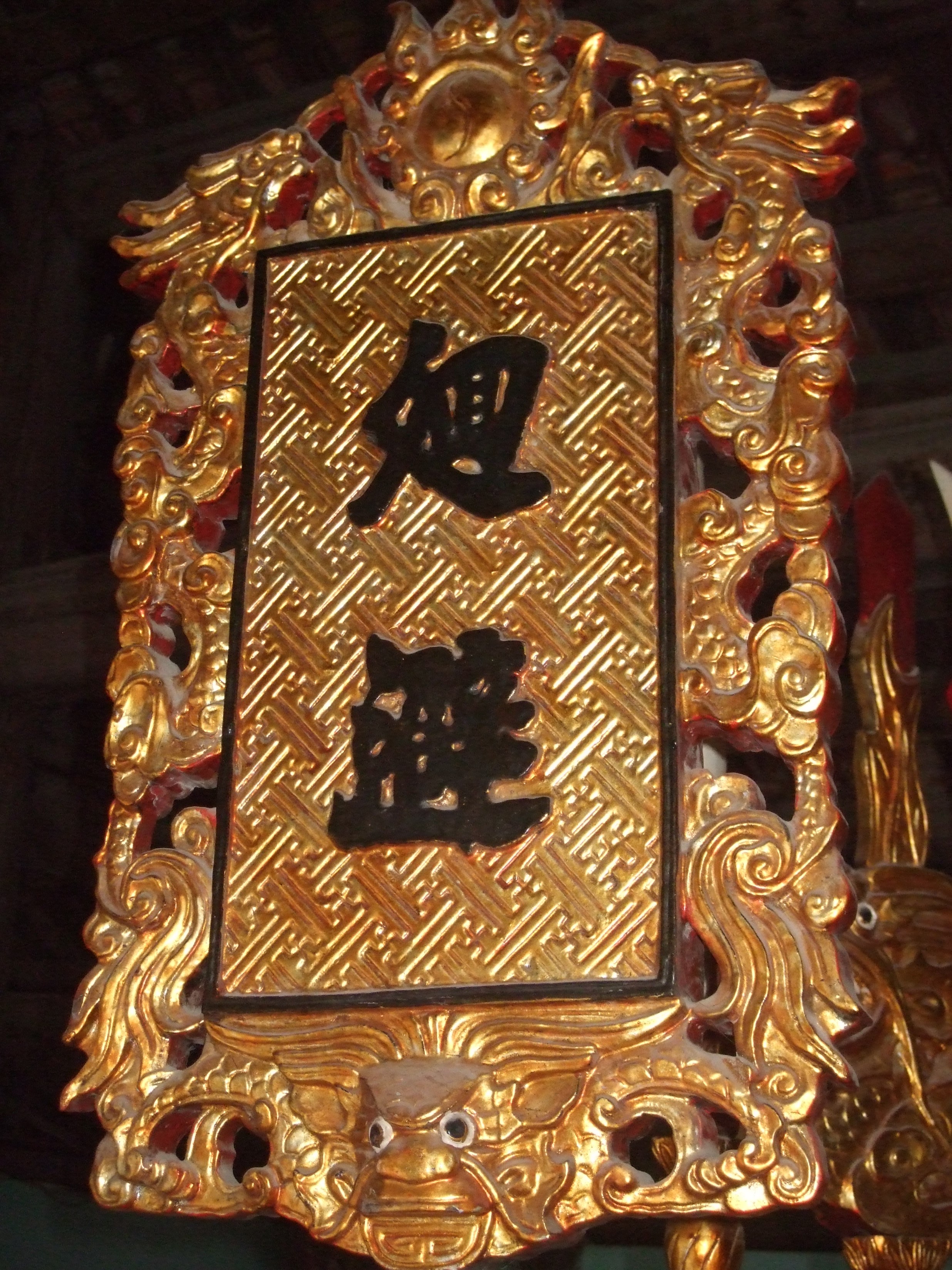 |

Back To Top
Abstract
Wiglaf hurries to the hoard, where he is mesmerized by the treasure that he finds.
Back To Top
Translation
"He, the triumphant in victory, when he beyond the seat
went, the young brave thane, saw many precious jewels,
glittering gold lay on the ground,
wondrous objects on the wall, and in that dragon’s lair,
daybreak flier of old, cups stood,
vessels of men of old, now lacking a burnisher,
deprived of adornment.* There were many a helmet,
old and rusty, a multitude of arm-rings
skillfully twisted. Treasure easily may,
gold in ground, overpower each one of
mankind, though one may hide it.
Also hanging he saw a standard all of gold
high over the hoard, greatest of marvels made by hand,
woven by skill of craft; from there light
shone out, so that he might see the surface of the floor,
could look at every part of those ornate objects."
(Beowulf ll.2756-2771a)
Back To Top
Recordings
Old English:
{Forthcoming}
Modern English:
{Forthcoming}
Back To Top
Finding Use for Treasure
After the excitement of the battle with the dragon, and Beowulf's heartfelt summary of his kingship, this passage is definitely something of a rest. But that doesn't mean that it's entirely silent, a point in the story where the poem's original audiences could entirely rest.
For there is treasure about.
And, along with the treasure comes a very interesting passage: "cups stood,/vessels of men of old,now lacking a burnisher,/deprived of adornment" ("orcas stondan,/fyrnmanna fatu feormendlease,/hyrstum behrorene" (ll.2760-2762)).
What makes this passage more than what it seems is it's implication about treasure and people's relationship to it. Because "deprived of adornment" follows "now lacking a burnisher" it sounds as if the burnishing, the polishing, was these cups' adornment. This makes sense since whatever precious metal they were made of would require maintenance of some sort to keep its shine.
But what's more is that as this treasure was in the care of a characteristically miserly dragon, it didn't receive that care that people would have given it. But add to this why people would care to preserve their treasure, especially the sorts of things described here. My own theory is that they would use these things and they would need them to be in their top shape.
Putting this all together you come out with the impression that the passage implies that treasure is ostensibly valuable only when it's being used by people. And treasure can't be used by the same person indefinitely, so the best way to keep treasure in use is to give it away. It's given away to be used by the young, who can then maintain it and then give it away again, thus keeping the cycle going indefinitely.
Not to mention keeping the preciousness of the treasure in tact indefinitely.
However, this reading of treasure as the fuel in a perpetual motion machine of gifting and receiving is troubled by what happens to the treasure hoard that Beowulf and Wiglaf won. It all gets buried with Beowulf.
To be fair, the treasure may well have been buried for a strategic purpose. After all, having great wealth would likely bring down the Geats' old enemies upon them much more quickly than the news of their loss alone.
Back To Top
A Shining Standard
Another illuminating part of this passage comes at it's end. The standard that lights the cave in which Wiglaf finds the hoard is clearly very shiny (being described as "all of gold" ("eallgylden" (ll.2767))), and must have sunlight striking it. But this sparkling standard is also significant because it echoes an earlier light in a cave: That which appears when Beowulf kills Grendel's Mother in her den (ll.1570-1572).
Because of the parallels - the light appears in a cave, comes from a fantastical source, flares up only after the defeat of a powerful monster of one sort or other - it's tempting to say that Wiglaf's assist in slaying the dragon is his own killing of Grendel's Mother. This reading is also bolstered by Wiglaf's taking treasures back with him to Beowulf just as Beowulf bore the hilt of the giants' sword and Grendel's head back to Hrothgar.
Yet, then, we run into the question: Is that where the parallels end? After the treasure is brought back to Beowulf and Wiglaf is cemented as the new leader of the Geats is he not still on the same trajectory as Beowulf?
Maybe he is, but because he isn't Beowulf (even if he is, for now, nameless) it's not his fate for a similar trajectory to land him in the same place as the poem's lead character.
Back To Top
Closing
Next week, the third and final stanza of "O Fortuna" gets translated (and the whole thing gets posted as a recording), and Wiglaf takes as much treasure as he can back to the waiting Beowulf.
Back To Top
Subscribe to:
Posts (Atom)