Showing posts with label Latin. Show all posts

Tuesday, December 4, 2012

"Dum Diane vitrea" - in Full!

Abstract
Translation
Recordings
Closing


Back To Top
Abstract

The complete translation of "Dum Diane vitrea" complete with recordings!

Back To Top
Translation

"When Diana's glassy torch rises late
And is kindled by her rosy brothers,
A pleasant breath of wind lifts
the etheric cloud from all couples;
Thus she softens emotive power
And immoveable hearts, which
Towards the pledge of love she sways.

As the light of the evening star fades,
Charm's humour is given to
The drowsy dew of fleeting passion.

Oh how fruitful is that remedy of drowsiness,
Which tempestuous cares and sorrows sedates!
So long as it steals up to sore open eyes,
themselves a sweet joy of love to have.

"Morpheus then draws forth
an urge in the mind
Like gentle wind over mature corn,
clear shoreside river murmurings,
the circuitous orbit of mill arms,
he who steals sleep from clear eyes.

After the smooth-tongued dealings of Venus
fatigue the mind's wealth.
This wonderful new mist swims
and settles in the eyelids.
Oh, how favourable the shift from love to slumber,
Yet how a kiss gives new rise to love!

The deadly fume evaporates from the womb,
As its three little rooms are bedewed;
These lovers eyes and eyelids are then filled
With the fog of sleepiness,
Yet vision veers not away.
Whence through the eyes are we bound
By animal power, as they are the will's helpers.

As beneath a leafy canopy of trees,
it is so sweet to cease when the nightingale sings.
How sweet to play in the meadow grass
with a bright beauty of a maid,
if there be many fragrant herbs to breath
if there be a bed of roses on which to lay,
oh how sweet the nourishment of sleep
after being exhausted by the chase of Venus' trade,
which instills such sleepiness.

Oh how great the unreliable varying
of the spirit of love!
It is as a wandering raft upon the seas,
when free from anchor,
In flux between hope and fear, both dubious;
So goes the battle of Venus."
("Dum Diane vitrea" [Complete])

Back To Top
Recordings

Latin:


Modern English:


Back To Top
Closing

That's it for the medieval Latin poem "Dum Diane vitrea"! That's also it for my translations of Latin. From here on in, it's Old English all the way!

Also, though this blog's name and layout will stay the same for the rest of December, watch for a new name and design come the new year.

Back To Top

Tuesday, November 13, 2012

Rafting through Battlefields ["Dum Diane vitrea" Eighth Stanza] (Latin)

Abstract
Translation
Recordings
An Opening Question
Pondering Love's Dualities
Closing

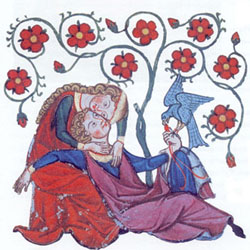
{Enjoined in love's embrace - along with that bird's. Image found on Michael Delahoyde's Courtly Love webpage.}


Back To Top
Abstract

The poem wraps up with a brief meditation on the nature of love (possibly both physical and emotional).

Back To Top
Translation

"Oh in how great the unreliable varying
of the spirit of love!
It is as a wandering raft upon the seas,
when free from anchor,
In flux between hope and fear, both dubious;
So goes the battle of Venus."
("Dum Diane vitrea" Stanza 8)

Back To Top
Recordings

The entire poem will be recorded once it's all been translated and posted.

Back To Top
An Opening Question

As the cap on the bottle of wisdom that is this poem, this final stanza rings so true that some might call it cliché. All's fair in love and war, love is a many faceted thing, etc, etc, etc. But there's more to it than that.

The images that this stanza evokes are those of the unanchored raft ("ratis"), and a battle (or, more stiffly, "campaign," ("militia")). Both of these are set at the whim of chance, and no manner of preparation can bring complete success. Neither being incredibly knowledgeable about seamanship nor a well-seasoned veteran will grant you a 100% guaranteed survival or victory. And of course, so it goes with love.

But why the image of a raft and a battle? Why not double down on the same image, rather than invoking both?

Back To Top
Pondering Love's Dualities

Because, at least so far as my theory goes, this stanza cuts to the quick of the poem and the poet's point for one final time. These images, at their most basic, are about the conflict of humans v. nature, and humans v. humans. Such a duality of imagery sets up the poem to make a point about the dual facets of love that seem to be the poet's major concern.

If this was written by Abelard, than his feelings towards love (particularly if it was written *after* the business of Eloise was *ahem* cut off) would definitely be much more than something romantic or cynical. Though both are certainly present. What could be more romantic than comparing one's feelings of love to an unmoored raft, and what more cynical than reducing them to something that can be worked through with a mixture of tactics, strategy and chance?

But the argument to be made about the poem being about physical and emotional love gets most of its steam from the adjective attached to battle - "Venus" ("Veneris").

Without delving too deep into ancient meanings of the goddess Venus (or Aphrodite) - at my own peril, I admit - invoking this love goddess suggests a leaning much more to the physical side of things. First and foremost among my reasons for thinking so is the fact that whomeever the poet is, they are more than likely Christian, and so any pagan deity is going to be used as a simple reference rather than anything particularly deep.

Besides that, there is something of a tradition of referring to the journey of the Christian mystic to god as being adrift at sea (and, though it may not directly relate, Anglo-Saxons associated such journeying with the extremities of loneliness, something that might come into the emotional mix of vacillating love). Because there's the possibility of the raft image making this religious reference, I think that it's quite likely that the direct reference to Venus is included to balance the poem.

The placement of these images, then, takes on some extra meaning. After all, it's definitely no secret that the majority of the poem has had connotations of physical rather than spiritual love, and so placing the spiritual before the physical in this the final stanza suggests that the spiritual must precede the physical. Or, at the least, it implies that it can in itself be a mooring for the fluxes in the physical aspect of love, if you can manage to find anchor.

What then, the poem ultimately says is that it's necessary to love spiritually, or platonically, or just plain emotionally, before loving physically. This highlighting of the spiritual while closing with the physical is a convenient and brief way to excuse what has come before while keeping tongue firmly in cheek (just as Chaucer's retraction does for The Canterbury Tales).

Back To Top
Closing

That's it for new entries for the rest of the month. Watch this blog on Tuesday 4 December, for the final "Dum Diane vitrea" entry (including recordings of it in Latin and English), and a special announcement about a major change coming to this blog.

Back To Top

Sunday, November 11, 2012

Blog Happenings for the End of 2012

Because I'm using National Novel Writing Month to launch myself back into writing my fantasy series, my blogging time has been short lately. So, instead of pushing through and getting out some sub-par entries, I've decided to put my blogs on hold for the rest of November.

However, I will be posting the entry for Stanza 8 of "Dum Diane vitrea" this coming Tuesday, while the final wrap-up entry for that poem will be posted on 4 December.

So, enjoy what's posted here and over at A Glass Darkly for the rest of November, and watch for new content come December!

Oh, and if you're interested, watch my Examiner.com video game blog for a new article every Saturday, plus an extra one this Monday!

Back To Top

Tuesday, November 6, 2012

Of Sleep, Nature, and Maidens Bright ["Dum Diane vitrea" Seventh Stanza] (Latin)

Abstract
Translation
Recordings
Euphemisms and Implications
So What
Transformations
Closing

{Edmund Spenser's Una with the lion and the lamb, a maiden bright indeed. Image found on Wikipedia}


Back To Top
Abstract

Pure nature comes alive in this penultimate stanza.

Back To Top
Translation

"As beneath a leafy canopy of trees,
it is so sweet to cease when the nightingale sings.
How sweet to play in the meadow grass
with a bright beauty of a maid,
if there be many fragrant herbs to breath
if there be a bed of roses on which to lay,
oh how sweet the nourishment of sleep
after being exhausted by the chase of Venus' trade,
which instills such sleepiness."
("Dum Diane vitrea" Stanza 7)

Back To Top
Recordings

The entire poem will be recorded once it's all been translated and posted.

Back To Top
Euphemisms and Implications

Where stanza four offered us a look at some quasi-natural imagery, this stanza brings it all back to pure nature. And, as was the case with previous stanzas, the poet's lingering obsession seems to be on sleepiness after sex.

But, more importantly, the reference to sex is never made directly. "Venus' trade" ("Veneris commercia") appears as it did in stanza five, but that is, after all, a euphemism. However, the romp described throughout this stanza can be likened to a sort of Edenic experience, and things that have made their way into modern romance (such as the "bed of roses" ("torum rosa"), make the association between this sort of natural play and sex quite clear.

But so what? The connections are there, but why are they there? Matters of who wrote this poem aside, the question to tackle now is why this poem - up to this stanza - has been written quite clearly about sex in such an indirect way.

Back To Top
So What?

The lack of direct reference to sex is definitely not suspect considering the poem's medieval origin. It was only the most bawdy of broadsheets that would refer to sex directly, and even when Chaucer wants to emulate the style of the basest of the base with his Cook he doesn't reference sex directly but uses the contemporary equivalent of our "fuck" ("swyve" (The Canterbury Tales, l.4422 (or II.iv.98, depending on your edition))).

So the euphemism via natural imagery and the idyllic setting are certainly not out of place. The connection to sex is essentially there because it's how medieval poets spoke of such things.

After all, the last thing sex was supposed to be then (and some would no doubt argue still is to be in the eyes of the Catholic Church) was fun or pleasurable. People who shared the opinion of the Wife of Bath, that human genitals are there to use, come kids or not, were definitely in the vocal minority. Hence, the need for this sort of natural imagery to create an allegorical window between the subject of a poem like this and readers.

It could be argued that as readers themselves, writers and poets like the composer of "Dum Diane vitrea" would be aware of these sorts of double meanings, but things like poetry and fiction could be dismissed as frivulous entertainments with no deeper meanings (hence there being so much lewdness couched within them).

Back To Top
Transformations

And what imagery it is! the poet here definitely describes something as any poet should: with brevity, depth, and affect. More importantly, however, is the fact that the image of a forest and a bright maid definitely contrast with the dusk and night imagery from poem's first stanza.

This shift in tone reflects a shift in the poem's subjects, from worn out daily toilers to rested and enraptured lovers. And, perhaps that is the poet's point. That in the eye of the storm that is the everyday, there is to be found a moment of calm, quiet, sunshiny love that inspires poetry, frolics, and fine words.

Back To Top
Closing

Check back here Thursday for Beowulf!

Back To Top

Tuesday, October 30, 2012

One Stanza, Three Ways ["Dum Diane vitrea" Sixth Stanza] (Latin)

Abstract
Translation
Recordings
A full First Clause
The Conceivable
In Satiable Terms
Closing

{Some fifteenth century imaginings of a child in a womb. Image found on the British Library's Learning: Medieval Realms website.}


Back To Top
Abstract

Appetites are sated, so sleepiness and the desire for more clash.

Back To Top
Translation

"The deadly fume evaporates from the womb,
As its three little rooms are bedewed;
These lovers eyes and eyelids are then filled
With the fog of sleepiness,
Yet vision veers not away.
Whence through the eyes are we bound
By animal power, as they are the will's        helpers."
("Dum Diane vitrea" Stanza 6)

Back To Top
Recordings

The entire poem will be recorded once it's all been translated and posted.

Back To Top
A full First Clause

First and foremost here, I need to make a quick mention that "womb," as far as I know, was used much more generally in the medieval world than it is in the modern one. Of course, there was the sense that it meant the female part that holds a foetus, but it also, as far as I can tell from my own reading and knowledge, meant the stomach as a fillable space much more generally. Thus, though the first clause retains its weirdness all the same, it at least isn't necessarily about pregnancy or conception or anything like that. Necessarily.

But, poetic license aside, there are really only three things possible with this first clause: It's about conceiving a child (since "the three little rooms are bedewed"), about having an appetite sated, or about the two lovers being a little flatulent.

Although fart jokes are a staple of medieval bawdy comedy (just as they are today), since this is a love poem (and as far as I know Abelard wasn't into that sort of thing), that last possibility can be instantly ruled out.

That leaves conception and the sating of an appetite.

Back To Top
The Conceivable

In terms of conception, the medieval understanding of human reproduction wasn't as advanced as ours is today, but it wasn't as backwards as might be expected.

In the early medieval period the prevailing idea was that both a man and a woman had to expel seed while copulating for a child to be conceived. In other words, both partners had to orgasm, and these orgasms had to be more or less synchronized.

However, after Europe's rediscovery of Aristotle between the twelfth and thirteenth centuries, Galen's two-seed idea was tossed out in favour of the Aristotlean notion that only a man's seed mattered and a woman just had to lay back and think of beautiful/strong/pleasing things. I'm simplifying here, but that's just because I don't want to distract from the poem at hand.

Speaking of which, if we carry the notion that the first two lines are about conception forward, then the couple described in the rest of the stanza becomes a tightly married one. After all, the remainder of the first sentence says, 'then they both felt tired, but they kept gazing at each other.'

Back To Top
In Satiable Terms

On the other hand, if we take the notion that the opening is about our lovers' sexual appetites being sated, then we come out with something a little more subversive: the idea that the sex act described in the rest of the poem isn't enjoyed by some miscreant lusty couple, but by a deeply loving one - though we're given no real suggestion about whether they're married or not. Once more, if we go with the appetite interpretation, we come out with a theme similar to the one seen last week: sex is natural, and just what happens between consenting, loving adults.

However, these two interpretations don't need to be kept apart like two cats in heat. No. They can be crossed over to create an even more revealing interpretation.

For the very fact that these two interpretations are possible suggests that the poet, as long as he was aware of the themes his work was evoking, or bound to evoke, meant this poem to assert that sex between a loving married couple is the same as sex between a loving un-married couple. Definitely a controversial thought, and certainly something Abelard could use to argue the case for his affair with Eloise.

Back To Top
Closing

Come back on Thursday for the remainder of Wiglaf's rant against the cowardly thanes (click here for part one).

And, if you find anything amiss in today's entry let me know. The same goes for anything you might want to add.

Back To Top

Tuesday, October 23, 2012

On the "dealings of Venus" ["Dum Diane vitrea" Fifth Stanza] (Latin)

Abstract
Translation
Recordings
A Flick of the Tongue
From the Other Side of the Bed
A Lament for Love
Closing

{A modern take on an ancient goddess of an ancient emotion. Image found on tribe.net.}


Back To Top
Abstract

In the name of Venus, post-coital sleepiness is described.

Back To Top
Translation

"After the smooth-tongued dealings of Venus
fatigue the mind's wealth.
This wonderful new mist swims
and settles in the eyelids.
Oh, how favourable the shift from love to slumber,
Yet how a kiss gives new rise to love!"
("Dum Diane vitrea" Stanza 5)

Back To Top
Recordings

The entire poem will be recorded once it's all been translated and posted.

Back To Top
A Flick of the Tongue

The word "blanda" can translate as things like "charming" or "flattering," but given the fact that this poem is essentially about sex I could hardly resist going with "smooth-tongued." For, so often are the dealings of Venus done with a smooth tongue, or those dealings make a tongue to be smooth.

Back To Top
From the Other Side of the Bed

At any rate, this section of the poem seems at first like it could be the last. However, there's a suggestion that, despite the onset of sleep, the desire for love continues to burn in the speaker and possibly in his partner as well.

What's curious about this stanza, though, is that it repeats the previous verse's theme to some extent. Where last week, we delved into the three images that were used for post-coital sleepiness, they were associated with their own mythological figure: Morpheus - a Greek god.

On the other hand, this week we have the Roman version of Aphrodite, the Greek goddess of love. So is it possible that these two stanzas are working on a kind of call and answer basis? Or did last week's give the male's sense of sleepiness after sex while this week's gives the female's? It's hard to tell without looking forward to next week's, but there's one more thing to look at before we close for this week.

Back To Top
A Lament for Love

The final couplet of this week's stanza begins with the same words as verse three ("quam felix," "how favourable").

Given that stanza three is one in praise of sex, and that this week's stanza refers specifically to an antique deity in charge of sex and matters of the heart, what can be said about these two stanzas?

The closing image of stanza three is of sore open eyes being joys of love, and here the final image is that of the love-generating kiss.

So are there the seeds of a love lament in here, since we're being pointed toward a comparison of the propagation of love with love's seeing and revelling in things that could be considered worn out? Or is this final line just a confirmation that when things wear out it's love that perpetuates our need for them?

At the very least, this subtle hint towards a comparison of these two things suggests some hesitancy about love on the speaker's part, lending some credence to the idea that the infamous Abelard wrote this poem.

Back To Top
Closing

Come Thursday we'll hear and look into Wiglaf's opening words to the cowardly thanes. Watch for it!

Back To Top

Tuesday, October 16, 2012

Natural Exhaustion ["Dum Diane vitrea" Fourth Stanza] (Latin)

Abstract
Translation
Recordings
Teasing Meaning from Images
It's all about Sleep
Closing

{An idyllic windmill scene. Image found on JA Tappero's Main Page.}


Back To Top
Abstract

The poet waxes on about satisfying (?) post-coital sleepiness.

Back To Top
Translation

"Morpheus then draws forth
an urge in the mind
Like gentle wind over mature corn,
clear shoreside river murmurings,
the circuitous orbit of mill arms,
he who steals sleep from clear eyes."
("Dum Diane vitrea" Stanza 4)

Back To Top
Recordings

The entire poem will be recorded once it's all been posted. This recording will then be posted with a final, full edition of my translation.

Back To Top
Teasing Meaning from Images

What this stanza describes sounds unequivocally like post-coital sleepiness. The way it's described with rustic, idyllic even, similes strengthens this reading, too.

After all, If love is often romanticized in classical literature as the affection between a shepherd and a shepherdess, why not also romanticize the urge to sleep afterwards with a bunch of natural imagery? Though it definitely needs to be noted that this stanza's imagery isn't entirely natural.

Corn may grow on its own, but it's made into fields by human hands, just as much as a windmill is something of human design and construction. Yet, associating these things with sleep makes sense on many different levels.

There's the obvious level of their soothing nature, and that of all three working together to paint a very calm and relaxed scene. And relaxed is the best word for this scene, since all of these actions are passive. The corn merely bends in the wind, the water is just running to lower ground, and the mill's arms turn as gusts go by.

Further, the first and third of these images are visual cues of something invisible but audible: wind, while the second of the three is an aural representation of something very visual. This synaesthetic description of the sweeping desire to sleep is incredibly effective if you think about the last time you felt utterly exhausted. Alternatively, you could compare this stanza's main image to the gradual release of tension in a yogic meditation or that you might experience if you just lay in bed, close your eyes, and concentrate on your breathing.

But why, if the poet wanted to depict an idyllic country scene, did he use these three things? Why does the poet choose the wind in a cornfield, the babbling of a river, and the wind through the arms of a windmill? These are all things found in the countryside, sure. But why these three? How do they work together? And why move from wind to water to wind?

Back To Top
It's all about Sleep

It's possible that this arrangement offers further reflection on the medieval biphasic sleep pattern.

The wind could be the gentle and effortless rest that sleep affords, while the water, coming in between wind images, could be the awake phase in between sleep periods (or sex itself, depending on how far you want to take the flow of the river).

What's more, shifting the wind image to that of a mill after that middle water image works perfectly well within an interpretation of this stanza as the medieval sleep pattern in miniature. After all, a windmill would often be used to grind grains (corn included) into meal or flour, and medieval associations between this flour and male potency (or more generally the active principle) are many.

So reading these three images as a representation of the night as a whole is certainly possible within context. What's especially significant about such a reading though is that it shows the poet's associating this sleep pattern with human use of nature, and the way that nature and humanity interact. On the surface, this kind of idea sounds tame enough, but through such a series of associations, the poet could well be asserting that sex is merely something natural.

Maybe the poet is even trying to go so far as to bring sex, something contemporarily thought of as dangerous and needing control (a natural, base urge), into the more civilized and human realm. Moreover, because of the cyclical nature of this series of images, the poet seems to suggest that sex is just another part of a natural cycle that can be put under human control, or under human use (as water and its flow can be).

Back To Top
Closing

Of course, all of this is speculation - go right ahead and share your own in the comments!

Also, don't miss Thursday's Beowulf entry - Beowulf is firmly cut from the story, as its focus moves over to the grieving Wiglaf.

Back To Top

Tuesday, October 9, 2012

Moon Fruit ["Dum Diane vitrea" Third Stanza] (Latin)

Abstract
Translation
Recordings
A Fruitful Opening
That Spontaneous Spark
Closing

{Handle it, but don't hold it, the poem counsels. Image found on a blog called Imprint.}


Back To Top
Abstract

Some of the virtues of sex are indirectly extolled.

Back To Top
Translation

"Oh how fruitful is that remedy of drowsiness,
Which tempestuous cares and sorrows sedates!
So long as it steals up to sore open eyes,
themselves a sweet joy of love to have."
("Dum Diane vitrea" Stanza 3)


Back To Top
Recordings

The entire poem will be recorded once it's all been posted.

Back To Top
A Fruitful Opening

The opening pun of this week's stanza is, thankfully, something that works in both languages.

"Felix" may not unerringly translate into "fruitful" but it's one of many possibilities, just as one could say that there are many English synomnyms for "fruitful." In any case, this is about as subtle as it gets, since the rest of the poem is just a celebration of sex.

Turning back to the pun in line one, though, it's possible that the play on the word fruitful/felix, could be a reference to the fertility rate of having sex during this waking interval.

But even something like the Domesday book didn't keep records of when children that women managed to carry to term were conceived down to the hour, so the potency of the hours between midnight and second sleep isn't really something we can check.

It's possible, though, that since the two hour window of wakefuless would be the best time for sex from a social/scheduling point of view (one of the few times you wouldn't be toiling away at your daily labour, eating, or, well, sleeping), that this is billed as the ideal time.

After all, it's not like that was the only time that medieval people knocked boots. Any time at which they could gain a private moment they'd do it, just as we do. There's no particular evidence that I can cite for that, but it's definitely something that just stands to reason.

With that sort of sexual freedom from a temporal standpoint, it makes sense that an authority like the Church would try to suggest an ideal time for sex.

It's a cold view of what is through-and-through a love poem, but since the "Dum Diane vitrea" was written in Latin, and Latin was the language of the Church and the educated (who were educated by the Church), it's not outside of the realms of the probable that this poem is a propaganda piece aiming to keep sex in (or move it to) a set time.

This interpretation of stanza three is also supported by the idea that Abelard may have written the whole of the "Dum Diane vitrea." Having been a victim of wild passions with his student, Eloise, and winding up castrated for his pleasures, he'd be the perfect person to get to sit down and write a stirring love song about how sex should be kept in the appropriate place. Make that appropriateness cosmic, and you've got a powerhouse on your hands.

Back To Top
That Spontaneous Spark

Once we get to line three, things heat up a bit further.

At this part of the stanza we get the conditional "So long as" ("Dum"). So, though the exclamation effectively closes the statement that covers lines one and two, we also have to consider sex something that sneaks up on a person.

In other words, it can't be a cold duty between a married couple (assuming that those are the people the poem addresses), but rather something spontaneous.

Back To Top
Closing

Check back here on Thursday for the rest of Wiglaf's mourning, and the return of the cowardly thanes!

Back To Top

Tuesday, October 2, 2012

Fading Light, Rising Passion ["Dum Diane vitrea" Second Stanza] (Latin)

Abstract
Translation
Recordings
Sleeping on It
Setting Speculation in a Bed of Structure
Closing

{The evening star, shining bright within the embrace of coming night. Image found on NASA's Astronomy Picture of the Day webpage.}


Back To Top
Abstract

Some action parallel to that of the previous stanza occurs, as the evening star fades.

Back To Top
Translation

"As the light of the evening star fades,
Charm's humour is given to
The drowsy dew of fleeting passion."
("Dum Diane vitrea" Stanza 2)

Back To Top
Recordings

Watch for the recordings of the whole poem once its translation is fully posted (around November 20).

Back To Top
Sleeping on It

Time is a tricky thing to pin down when it's not referred to with a clock reference.

All the same, this brief stanza looks like it's about the point in a typical night when people would rise from sleep for a brief period to do some night activities. This dual-phase sleep practice goes back to the pre-artificial light days, when people would go to bed around sunset, wake around midnight and then go back to bed two hours later until day break.

It might sound a little useless to sleep in bursts like this, but aside from the practical purposes (like guard shifts), sleeping in two phases seems to make the mind more perceptive and to really help cognition (just ask any regular napper).

More to the point for our poem, with this bi-phasal sleeping pattern in mind this stanza describes the influence of Venus, the evening star ("Hesperus") on the people as they sleep. This stirs their passions and their loins as "the drowsy dew of fleeting passion" ("roris soporiferi
mortalium generi") falls upon them.

To be more direct, the couples in the poem have sex - one of the many things that people would do during their nightly two hour vigil. And an activity that's quite perfectly suited to that time between sleeps. After all, you'd be out working all day and probably a little to weary and weighted to be in the mood for sex before sunset, but after that initial rest, your mind would be relaxed, your loins would be fired,and you'd be ready for it.

So perhaps the action of last week's stanza wasn't so much about the power of palour to assauge the woes of a person's public life and to soothe them as it was simply about the moon rising (since it would be the middle of the night) when people woke after their first shift of sleep.

Back To Top
Setting Speculation in a Bed of Structure

As per how these two stanzas work together, this one doesn't seem to be moving anything forward, rather it just describes another act that goes on during the action of the first stanza.

As Diana rises in the moon and the stars come out, the evening star fades and its influence over the sleepers is complete as they awake and are ready to consummate the desire of their hearts.

Structurally, it's also likely that this stanza would work as the first chorus of this poem as a song. After all, it is from the "Carmina Burana" - a collection of such songs. Further, this stanza's brevity also suggests that it's a chorus.

Yet, however "Dum Diane vitrea" develops from verse to chorus to verse to chorus and onwards will need to be seen next week.

Back To Top
Closing

Leave your thoughts on my theories in the comments for today's entry, and check back here on Thursday for how the poet portrays Wiglaf's immediate reaction to Beowulf's death.

Back To Top

Tuesday, September 25, 2012

Moon Love ["Dum Diane vitrea" First Stanza] (Latin)

Abstract
Translation
Recordings
Liminal Evening
Sister to the Stars
Lifting the Cloud of Unloving
Closing

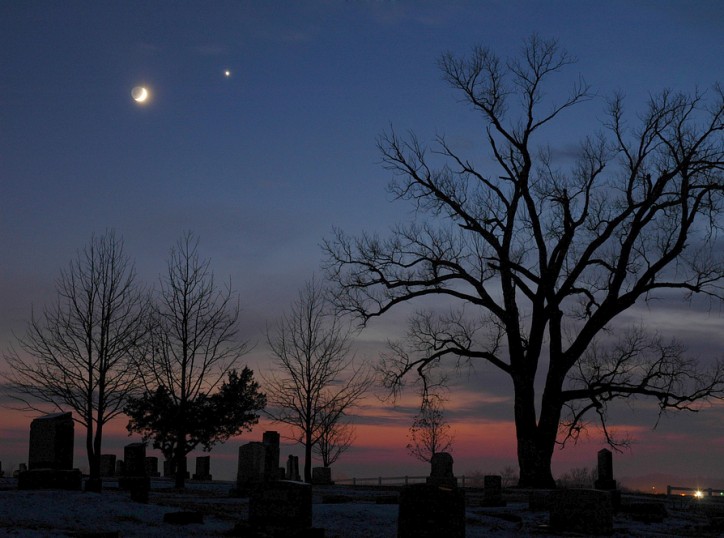
{The moon and stars looking ready for a night out. Image found on NASA's "Astronomy Picture of the Day" website.}


Back To Top
Abstract

The poem begins like so many days: with the dawning of the sun as a stand in for love.

Back To Top
Translation

"When Diana's glassy torch rises late
And is kindled by her rosy brothers,
A pleasant breath of wind lifts
the etheric cloud from all couples;
Thus she softens emotive power
And immoveable hearts, which
Towards the pledge of love she sways."
("Dum Diane vitrea" Stanza 1)

Back To Top
Recordings

Since this is a poem, it will be recorded as a whole and then posted as a whole once it's been completely translated. Once that happens, and all of the individual stanzas have been posted, an entry will be dedicated to looking at the poem as a whole. This entry will also include a complete recording.

Back To Top
Liminal Evening

What is "Diana's glassy torch"? Is it the final light of evening? Or is it the way that the sun reflects from the curvature of the earth so that we can still see some light even though the sun's already set. Whatever it is, it makes it clear that this stanza is about a liminal moment.

That is, this moment is one between two set, concrete points of time - the day and the night.

Yet, even with this stanza's liminality established, what is it that causes this cloud that's apparently settled over couples to lift?

As far as can be told from this stanza, it's just the switching over from day to night.

The most relevant aspect of this transition seems to be that it's a move from the outward show of day toward the private and unknown night.

The reference to Diane's mysterious brothers (or allies, "fratris") supports this interpretation, after all, only when night has fully arrived do the stars emerge.

And that's just what her brothers are - the stars.

Back To Top
Sister to the Stars

For, Diane is the moon and her glassy torch is the moon as it sheds its pale light, so her rosy allies are the stars. Why they're described as being rosy is unclear, unless it used to have a meaning along the lines of self-luminescent. A person with rosy cheeks is usually blushing, and a rose itself is red - a colour that is vibrant enough to pull in human attention.

With all of that out of the way, just what is the cloud that settles over couples?

Back To Top
Lifting the Cloud of Unloving

Since this cloud is dispelled as the moon rises and the stars come out, it sounds likely to be the troubles of the day. The moon, accompanied by the stars gives such a different atmosphere that it changes the context of perception and allows people to forget their troubles.

Perhaps, along with factors of wealth and work, this is also why palour was sought after among women in classic ideas of beauty - just as Diane's pale light could inspire lovers to come together, so too could the palour of a young woman be considered a palliative against the troubles of the day. Maybe such paleness was also important because it helped to wash away whatever troubles a husband/lover experienced in the public sphere.

Th public/private binary is definitely an interesting thing to apply to this poem since it already invokes the binary of night and day (through implication), but it's also problematic.

Medieval life wasn't exactly one that leant itself to privacy - walls were thin, roads were narrow, and small towns banded together not to be cliquey and such, but because it was necessary for survival and protection.

As a result, private/public would be better represented as public/less-public, in that at least around the house (most) people wouldn't be intentionally watching you.

Back To Top
Closing

Next week's stanza continues along the way of love and calls on a lot of night imagery, so perhaps we'll see all of these ideas come into play again then. In the meantime, leave your own thoughts in the comments, and watch for Beowulf's final farewell on Thursday.

Back To Top

Sunday, September 16, 2012

Shining a Light Fore and Aft

Welcome to the first Sunday Edition of A Glass Darkly.

In keeping with the themes of my other entries in this blog, since Sunday is named for the Sun, these entries will shine a light on what I did related to my writing over the previous week, while also using that light to peer ahead into the next. Yes, there will be lists, but there'll also be a little bit of description. Let's get to it.

As you might remember from the last "Update Entry" I made, I wrote that I was going to provide an update every three days rather than every two. That was back on Monday, and so things have sort of slackened on that end of things.

However, I'm now yanking that slack and drawing in the last parts of that blog update for this Sunday entry. So, in the future, those sorts of blog updates will come out every Sunday. In the meantime, these entries will be all about my writing efforts.

Over the past week, here's what I've done for the sake of my fiction and poetry writing:

  • Re-organized the schedule of A Glass Darkly to better accomodate my fiction and poetry writing;
  • Come up with the climactic moment for my current fantasy novel (Working title: Dekar 4);
  • Made notes for a number of short stories;
  • Done some world building for that fantasy series I'm working on (the world's cosmology, history, and magic system, specifically);
  • Compiled a list of Canadian science fiction magazines.

As a refresher, here are the things still outstanding from the blog update of August '12:

  • Send out two short stories to magazines
  • Outline entirety of the fantasy novel I'm writing
  • Completed 10 of those chapters
  • Completed the next act (4 scenes) of an audio drama I'm working on

It's my hope that I'll have all of these wrapped up come next Sunday.

Until then, don't miss tomorrow's creative writing entry and Friday's look at Luke Wilson and Samuel L. Jackson's Meeting Evil over at A Glass Darkly. Plus, on Saturday, you'll be able to find the newest "Annotated Links" at that blog as well.

And keep an eye out for Tuesday's translation of a poem possibly written by Peter Abelard (of the famed pair of star-crossed medieval lovers Héloïse and Abelard), "Dum Diane vitrea," followed by Thursday's look at Beowulf's burial instructions here at Tongues in Jars.

Oh, you might also have remembered that I mentioned a video game blog that I'd be starting up soon. I still intend to start it sooner rather than later, so watch for a link in future entries.

Back to Top

Tuesday, August 14, 2012

Fortune Beguiled? ["O Fortuna," Third Stanza] (Latin)

Abstract
Translation
Recordings
Final Notes
Sorrow maybe made Joyous
Closing

{Lady Fortune likes to greet those she favours with a fist bump - for obvious reasons. Image found on Doctor Michael Haldane's Translation Homepage.}


Back To Top
Abstract

The poem's speaker finally gives in under the crushing weight of Fortune, and laments, calling all others to join him.

Back To Top
Translation

Ah Fortune, you do invert
My health and my power,
Ay do you torture me with desire and weakness.
Now without hindrance let us strike
The chord in time, lament loudly with me,
For Fortune foils even the fortunate.
("O Fortuna", 3rd stanza)

Back To Top
Recordings

Latin:

{Forthcoming}

Modern English:

{Forthcoming}

Back To Top
Final Notes

Once more, the translation above is not entirely literal - but that's just not my modus operandi.

Though the most altered line is the final one. Not that the original Latin ("quod per sortem sternit fortem") doesn't come out to something similar when translated literally, word for word ("which by fortune overthrow the strong"). It's just that the above translation dwells less on the words of the original and attempts to delve more into the sense of those original words.

The basic idea is that Fortune treats everyone equally, regardless of their merits. What better way to express that in English than to match "Fortune" with "fortunate"? Plus, though not necessarily a quality in thirteenth century Goliardic poetry, the alliteration is also very English.

Back To Top
Sorrow maybe made Joyous

Now, although this poem ends on a pretty down note, one phrase is curious. In the original Latin it is "mecum omnes plangite," in the above translation it's "lament loudly with me." What's interesting here is that, though it's framed by the sorrowful "lament" the speaker calls for everyone to come together to lament Fortune's tyranny.

But, what usually happens when a bunch of people get together (even medieval people)? A cracking party ensues - of one sort or another.

So it might be something that's coming from looking a little too deep, but including the call for everyone to come complain with him suggests that the speaker is aware that Fortune is not the only thing that runs in cycles.

It could be that he's trying to start some kind of spirit boosting gathering, even if it's just a bunch of monks getting together and moaning about their misfortunes. Unless they're all Dominicans, chances are one will tell a joke or relate a misfortune that another will chuckle at, and things will go up from there.

Or, of course, they'll reason that this Fortune stuff is all pagan nonsense and go off to read the loose-parchment copies of the story of Christ jousting against Satan that they've hidden in their bound books of theology.

Back To Top
Closing

Come Thursday, Wiglaf is in the dragon's hoard and does some hoarding of his own - while the poet ornaments his tale with a brief meditation on the dragon.

Back To Top

Tuesday, August 7, 2012

Fortune Bemoaned ["O Fortuna," Second Stanza] (Latin)

Abstract
Translation
Quick Notes
Fortuna's Subtlety
Translating Poetry can be Torturous
Closing

{Another of Fortune's wheels? Image found on Wikipedia.}


Back To Top
Abstract

The speaker further builds on his complaint against Fortune.

Back To Top
Translation

"Ah, Fortune, vast and void,
On your spinning wheel idle health ay turns to bad standing;
Both ever dissoluble, viewed but darkly,
Yet always to me seeming vainly lovely
As you bring your laughing, desecrating lash
To my naked back."
("O Fortuna", 2nd stanza)

Back To Top
Quick Notes

If you look at the translation offered on Wikipedia, and then at the one that I present here you'll probably notice some differences. Once more, they've been made to keep the medieval flavor of the poem more or less intact.

Line 4 might be going a bit too far with its phrasing, but nothing was ever said about the poem's original flavor being mild.

Back To Top
Fortuna's Subtlety

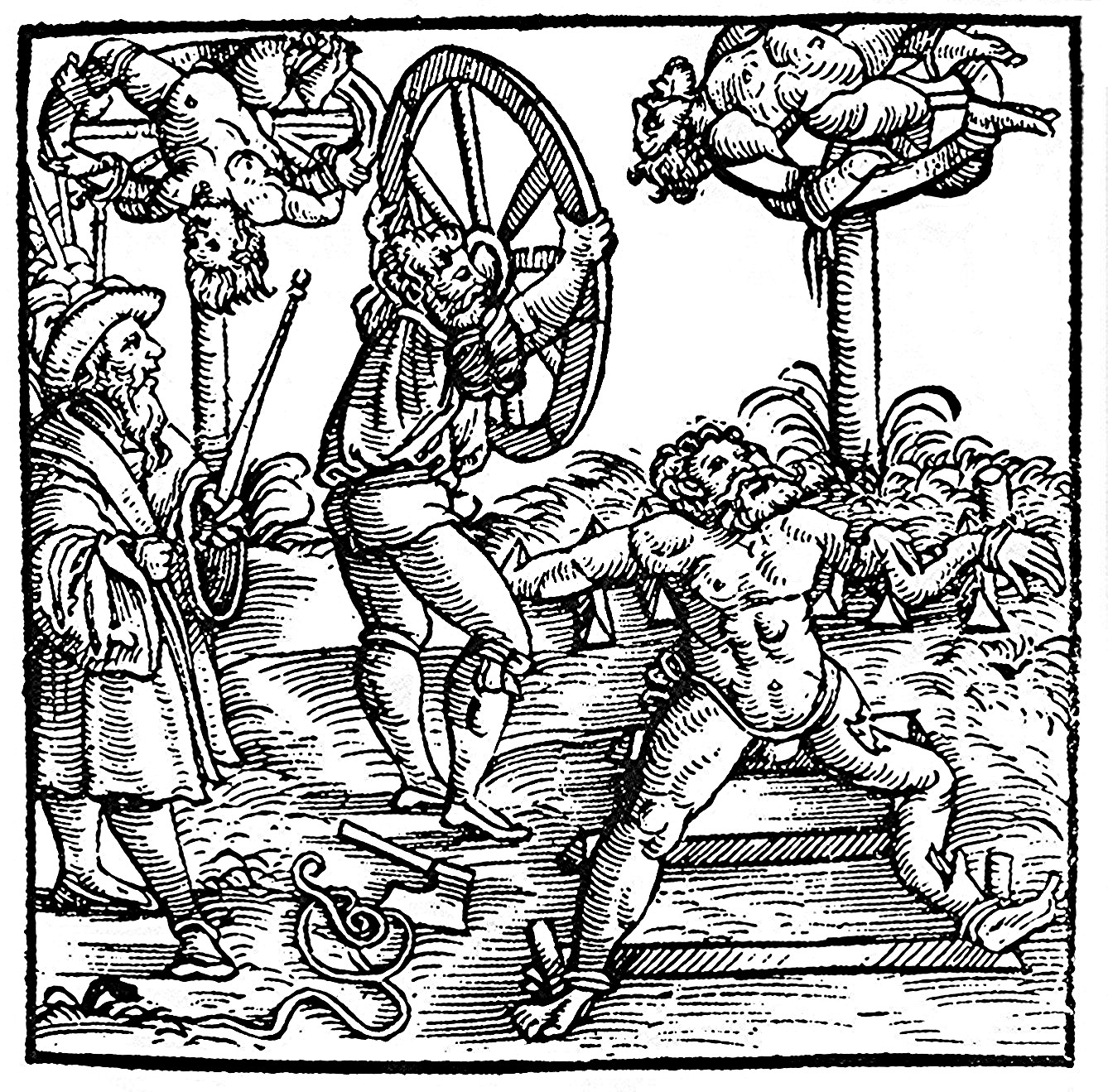
In fact, torture is clearly at play here. The wheel as a torture device was used in the middle ages, and the poem was written right in the middle of this period, sometime in the thirteenth century. But even then, there're the final two lines of the stanza that explicitly mention a "laughing, desecrating lash" (ludum, ) that is brought to the speaker's "naked back."

There's really no question that torture imagery is at play here. This might even be building on the subtle dominance of women peeked at in the first stanza of the poem.

Though they lacked prominence in places of power, their influence, however subtle and unseen in history books, cannot be overlooked. Even through to today, women who are villains (and even heroines) more often than not work their schemes through wit and wiles rather that brawn and brawling.

The binary stereotype that men are strong and women are smart (though usually not book smart) has persisted for a long time, and "O Fortuna" definitely looks like a medieval manifestation.

Back To Top
Translating Poetry can be Torturous

Although it might be a unique variation, what does it mean for the sort of torture imagery here (variably the breaking wheel, and fortune's laughingly lashing a person's back or taking her "pleasure" ("ludum") on a naked back ("dorsum nudum"))?

The Latin word used for "laughter" or "pleasure" is "ludum." This word refers to things like laughter, play, jests, or just a generally fun, interactive time. So how does that relate to being whipped?

On the one hand it could be a bit of the repressed seeping through. In the middle ages those who could write and had the means to do so were trained by the Church. So, it could be that the whip is "laughing" as well as "desecrating" because it injures the body that god created while also relieving the pent up desires that that body has through taking on pain: a feeling as extreme as pleasure.

On the other hand, the above translation does take some license in coming out with "As you bring your laughing, desecrating lash/to my naked back." The poem in Latin reads "...ludum dorsum nudum...," all three of those words are together, but it's not entirely clear what's doing what.

If they all create a single direct object phrase (since they are in the accusative case), then any order could be used. "Laughing naked back," "back laughing naked," "naked back laughing." Even if any of these are used, the element of fun remains in the act of torture.

The only real change in meaning that results from these variations is that the laughter's moved from the whip to the speaker's back: the gashes opened by the whip being likened to the open mouth of someone laughing.

In either case, this is definitely a poem that has more going on than another, more pious piece translated earlier.

Back To Top
Closing

Check back here on Thursday when Wiglaf views the hoard for the first time, helped by the luminescence of a battle standard.

Back To Top

Tuesday, July 31, 2012

Fortune Bewailed ["O Fortuna," First Stanza] (Latin)

Introduction
Abstract
Translation
Translation Notes
A Few Words on the Moon
Closing

{A picture of the page of the Carmina Burana manuscript, where "O Fortuna" first appears. Image found on Wikipedia.}


Back To Top
Introduction

I've chosen to spend the next three weeks with "O Fortuna" because of it's wide popularity, because of my own curiousity, and because I wanted to be clear on just what the lyrics are.

Although in the coming weeks I'll be back to my trusty pocket Latin dictionary, today's translation was done with the help of Google Translate and InterTran. Rather than just presenting a literal translation though, some parts have been embellished in an effort to keep something of a medieval feel.

Recordings of this poem will be posted, but not until all three stanzas have been translated and posted.

Back To Top
Abstract

Fortune's instability is bemoaned, and the extremity of bad fortune rather than that of good fortune is dwelt upon.

Back To Top
Translation

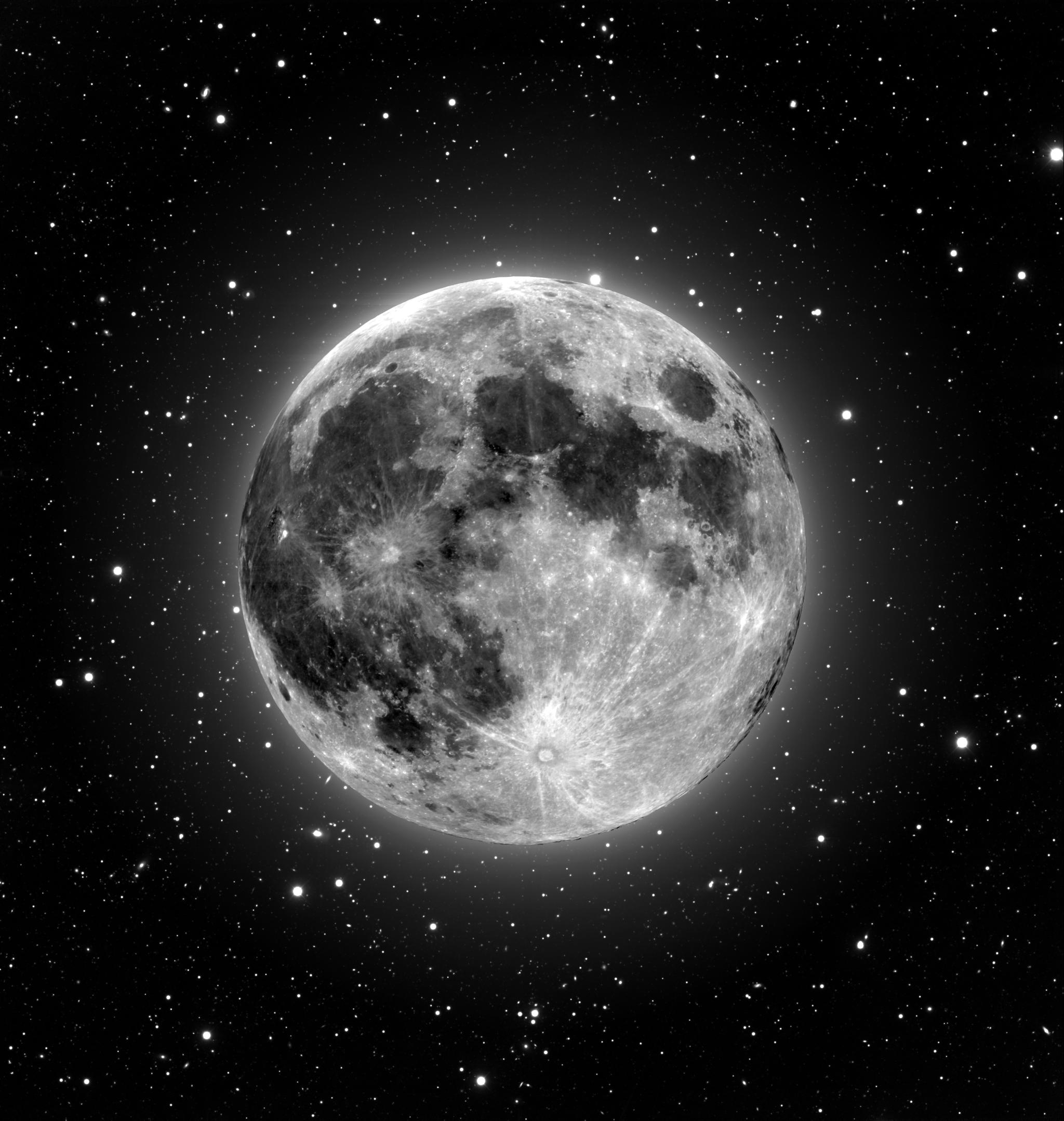
"Oh Dame Fortune, as variable of state as the       moon,
Ever waxing, ever waning -
Ah execrable life - now firm, now full of cares,
A game for the sharp-minded,
Down in the depths of poverty -
As does ice you too often melt away."
("O Fortuna," 1st stanza)

Back To Top
Translation Notes

Along with moving the words of the poem from Medieval Latin to Modern English, I've also made some other changes to it as part of the translation. Some of these changes involve leaving things just as they are, while others involve me taking some poetic license with words or phrases. What follows is a general overview of these changes.

Literally, the second line reads "ever rising, or ever falling" ("semper crescis aut decrescis"). This literal translation captures the sense of a person's fortune rising or falling, using senses of those two verbs that are still commonly understood.

However, the above translation makes the case that the second line is supposed to describe the first line's simile further. The words "waxing" and "waning" are still used of the moon specifically, but their otherwise medieval flavour is one of the things done to keep the original medieval feel of the poem.

Punctuation is another thing that was altered.

In the version from Wikipedia, there's a comma after the first line, a semi-colon after the second, and a comma after the fourth and fifth. However, because the last line refers back to Fortune herself, everything from line three to line five has been put between em-dashes.

These em-dashes mark lines three to five as the diversion that they are. For these lines aren't about Fortune directly, but are about the wretched uncertainty of life under such a constantly shifting power.

Back To Top
A Few Words on the Moon

That the power of Fortune is represented by the moon shows that the poem's original composer had a sense being under such consistent inconsistency. Yet, although much of this stanza focuses on the ills of Fortune and of being on the bottom of her wheel, the fact that she uses a wheel does instill some hope; just as the moon will grow full and light the night after being absent.

Moreover, in addition to being linked with shifting Fortune, the moon was also associated with virginity in the medieval world. The two are connected in medieval thought because of the moon's classical association with the ever-virgin Roman goddess Diana.

This association with virginity may be working in "O Fortuna" to imply that Fortune is not only fickle and ever-changing, but also impossible to impregnate. That is, you cannot change Fortune from outside of Fortune, if you wanted to somehow alter your Fortune you would need to have some sort of "in" with Dame Fortune.

Back To Top
Closing

Come Thursday, Beowulf will give Wiglaf his penultimate command, and the young thane will run to the hoard to fulfil it.

Back To Top

Tuesday, July 24, 2012

Extending Lore on Love and Passion [12:60] (Latin)

Abstract
Translation
Recordings
Repetition Leading to Implication
Word Woes: Overcome?
Closing

{Words upon words - some to be lost between languages. Image found on the blog Thoughts on Books."}


Back To Top
Abstract

Isidore further expounds on the theory and lore of good animal husbandry.

Back To Top
Translation

[60] "Then are those which have the heavy mares look at no animal of deformed appearance, such as dog-headed apes and gorillas, such faces are not made visible to those looking like they are pregnant. Truly this is natural for females that is if such is seen or if the mind conceives of it in the extreme heat of passion, that is conception, such will be in the children that they create. As a matter of fact, animals in the enjoyment of Venus transfer their outside to the inside, and they seize their fill of such a figure of their types in appropriate quality. Among animals those born of diverse kind are called two-kinded/mutts such as mules from mares and donkeys; hinny from horses and female donkeys; mongrels/half-breeds from boars and pigs; sheep-goat (tityrus) from ewes and he-goats; raidos [from ram + IE *ghaidos] (musmo) from she-goats and rams. On the other hand, these are truly the leaders of the herds."
(St. Isidore of Seville, Etymologiae 12:60)

Back To Top
Recordings

Latin:

{Forthcoming}

Modern English:

{Forthcoming}

Back To Top
Repetition Leading to Implication

While he repeats much of what was written in paragraphs 58 and 59 here, Isidore seems to be expanding to all women the reproductive lore from those paragraphs. Otherwise he would have gone with a different phrase than "...this is natural for females" ("Hanc enim feminarum esse naturam") to describe the practice of keeping ugly things away from pregnant women.

Unfortunately, this is just a matter of implication, since Isidore jumps right back to the animal after he has finished getting into some titillating descriptors (the "extreme heat of passion" ("in extremo voluptatis aestu") and the "enjoyment of Venus" (in usu Venerio) both being polite euphemisms for orgasm and sex respectively).

Back To Top
Word Woes: Overcome?

When he settles back on animals, Isidore rounds off the first part of his book about animals with some of the different two-kinded and hybrid mixtures that people have come up with.

Now, either English breeders have been put to shame here, or Latin simply has a far greater depth of expression, since "burdo" translates easily enough into hinny, but "tityrus" and "musmo" remain untranslatable to varying degrees (as far as I can tell).

It's not as satisfying as a portmanteau of the two, but sheep-goat is the result of a sheep/goat cross-breeding, though these are apparently rare in nature (and referred to as geeps when created in labs). So sheep-goat is the closest translation of "tityrus" that English has to offer.

On the other hand, "musmo" is apparently entirely untranslatable, since even a satisfactory compound English name isn't available. Yet, if mules and hinnies are different based on the gender of the horse or donkey in the pairing, so too should the result of a she-goat and a ram and a ewe and a he-goat be different.

So, to remedy the untranslatable malady of "musmo," a little digging was done and the word "raidos" was created. It's a combination of "ram" and the reconstruction of the Proto-Indo-European word for sheep - *ghaidos. It sounds kind of like "Raiden," and so is appropriate, given the sentence that Isidore ends with: "...these are truly the leaders of the herds" ("Est autem dux gregis").

Back To Top
Closing

This Thursday, Beowulf continues his speech, talking about his time as king and making a very curious statement.

Back To Top

Tuesday, July 17, 2012

Sex, Horses, and Reproductive Lore [12:58-59] (Latin)

Abstract
Translation
Recordings
The Galen Connection
Beautiful Thoughts, Beautiful Offspring
Closing

{Jacob, showing the sheep the peeled rods. Image found in the National Library of the Netherlands' Medieval Illuminated Manuscripts Collection.}


Back To Top
Abstract

Isidore gets into the details of managing the conception and birthing of animal offspring for desired results.

Back To Top
Translation

[58] "Certainly human diligence has paired many diverse animals together in sex, so too are discovered other types mingling in forged embraces; just as Jacob was able to get animals of unnatural color and likeness. For the rod was absorbed by those fertile sheep, which they would see by the water as the shadow of a ram looming over them.

[59] "Further, this itsef is done with the fertile mares of a herd, so that the birth of horses is affected by what is thrown before them while they conceive, which are able to conceive and create their likeness. For on their collars are painted in a beautiful way and placed in their presence, those that they respect, which leads to quick births of animals like those that they see."
(St. Isidore of Seville, Etymologiae 12:58-59)

Back To Top
Recordings

Latin:

{Forthcoming}

Modern English:

{Forthcoming}

Back To Top
The Galen Connection

The ideas that Isidore writes about here might just be pulled from the works of the famed second century physician and philosopher, Galen. His theory of conception was that it was necessary for both a man and a woman who wanted to have a child to orgasm at the same time, thereby having their contributions to the child line up.

A failure to impregnate a woman or to become impregnated was a failure to climax at the same time in other words, and not necessarily chalked up to either partner's having something wrong with their equipment.

Further, though, Galen also wrote about how it was important for the parents-to-be to imagine beautiful things during intercourse.

This was especially true for women, since there was a vague sense that they carried the human essence that would become a child and that men merely helped to shape and quicken this essence. So, if a man was thinking of a lovely thing, and the woman he was with was thinking of some sort of "dog-headed ape" (to borrow Isidore's "cynocephalus" (12:60)), it was believed that her conception would result in the child being somehow deficient.

Unfortunately, the emphasis on simultaneous orgasm didn't last too far into the medieval period since the re-discovery of Aristotle led to the adoption of his ideas on the matter. According to old Ari, only the man had to orgasm during sex; it was merely the woman's job to catch his ejaculation properly.

Back To Top
Beautiful Thoughts, Beautiful Offspring

As far as the animals that Isidore writes about here are concerned, the same principles are in play. Plus, he wisely refers to the greatest auctoritee of them all in the medieval world - Scripture.

Jacob used his own sort of animal engineering, and that lead to his prosperity, so why can't contemporary people do the same, the reference implies.

In fact, paragraph 59, though only about mares, talks about presenting those that are fertile with beautiful things so matter of factly that the lore presented is definitely taken as pure fact.

Perhaps there is some truth to it, since a birth might not go so smoothly if a mare gets spooked in the middle of it, or is under extra duress because she's being stared down by some cynocephalus or other.

Back To Top
Closing

Check back here Thursday for Wiglaf's washing, and the beginning of Beowulf's rather telling speech.

Back To Top

Tuesday, July 10, 2012

Moving from Horses to Mules [12:56-57] (Latin)

Abstract
Translation
Recordings
Moving Mules from Language to Language
The Power of the Bigenerum?
Closing

{Simply grey, but what a worker. Image from the National Library of the Netherlands' Medieval Illuminated Manuscripts collection.}


Back To Top
Abstract

Isidore's generalization about the three kinds of horses moves into a piece about mules, their uses, origins, and habits.

Back To Top
Translation

[56] "There are three kinds of horses: those apt for war and work, others to drive the commons and the herd, but are not apt to ride, the third arises from a mixture of the diverse kinds, that are truly called two-kinded (bigenerum) which from diverse sorts are born, like mules.

[57] "Moreover, the word mule is had from the Greek for "drive" (tractum). Among the Greeks, millers truly use this mule to turn the mechanism of their mills. The Jews freed those flocks when Jacob made them conceive mules in the desert by himself, made of the first born, so that the mules from there were newly and against nature born among natural animals. Wild asses to this also are added as well as donkeys: and they themselves by the same method are found in intercourse, so that very quickly are donkeys born."
(St. Isidore of Seville, Etymologiae 12:56-57)

Back To Top
Recordings

Latin:

{Forthcoming}

Modern English:

{Forthcoming}

Back To Top
Moving Mules from Language to Language

Although mules are well suited to menial tasks, like powering mills, Isidore did not make them easy to translate into English. Much of paragraph 57 is understandable with some tweaks and some twists, but it all runs on contemporary shared knowledge more than anything else save for its opening sentence.

The relationship between whatever Greek word is in question and the Latin tractum is not entirely clear. The sentence could mean that the Greek is derived from the Latin, or that the Latin term and the Greek are the same, and so there's no need for the differentiation that including both terms brings.

The quick retelling of the story of Jacob and Laban's flocks is also altered in the original Latin. The crux of this is the phrase "Ana abnepos Esau" (12:57) Esau is a familiar name, but Ana looks off, and the combination of the two with the word for "great great grandson" makes it even more bizarre. Perhaps there's some esoteric bit of lore about a grandson that's at work here, but that has since been forgotten about.

Other interpretations of these passages are possible, but these are the ones that seem most likely to me, given my limited knowledge of Latin's complexities.

Back To Top
The Power of the Bigenerum?

To sum up the entirey of paragraph 57, mules are work animals.

But the question that arises from these two paragraphs is: Does this designation as a work animal come from mules' being a perfect mixture of two types of horse - as seems to be implied by a Latin adjective describing mules - "bigenerum" (12:56)?

Given the description of mules thus far, it seems that the answer must be yes, resoundingly. After all, combine horses that can be ridden into war, and those that can be used to herd animals, and the natural result would be something hardy and used for strenuous activity.

But then, if Esau is being credited with the creation of mules, then does that mean that he did it intentionally?

According to the story in the KJV (Genesis 30:25-43), Jacob creates these mules in order to steal away Laban's flock after he has worked for him for seven years in exchange for Laban's daughter Rachel.

Since the idea to use the rod to scare the females into giving birth while they were drinking, resulting in mules, was his own, Isidore is definitely in the right to say that these mules were "were newly and against nature born among natural animals," ("nova contra naturam animalia nascerentur" 12:57).

Truly intriguing in the KJV though is the mention in verse 41 of chapter 30 of Genesis that Jacob only used his trick when the strong ones among Laban's flocks and cattle were pregnant. In other words, they weren't just bred for necessity, they were bred for strength - something that Isidore nails here.

Back To Top
Closing

Check back here on Thursday for Beowulf and Wiglaf's brief revel, and a tragic realization.

Back To Top

Tuesday, June 26, 2012

Isidore of Seville on Color (Pt.2) [12:53-55] (Latin)

Abstract
Translation
Recordings
The Trickiness of Translating Color (2)
High Riders and Low Riders
Closing

{A stained glass window from The Cathedral of Saint Mary of the See, also known simply as Seville Cathedral. Image from the Wikipedia.}


Back To Top
Abstract

Isidore continues his descriptions of colors, and ends with an indirect description of a pony express.

Back To Top
Translation

[53] "Roan is what the common folk call guaranen. Brazen itself the commons call this; which is colored in the way of bronze. On the other hand, myrtle is simply purple.

[54] "Moreover, they call it [dowry], the color that is the same as the ass' color: that itself and ash grey are the same. They are also those colors in the wild breeds: those born, as the horse breeders say, without the ability to pass on the refinement of civilization.

[55] "Moors are black, truly the Greeks call black mauron. Gallic horses are in fact small horses, which the commons call brownish. Truly gifted the old ones call those which drive back, that is lead; or which run on public ways, going to and fro as they are accustomed to do."
(St. Isidore of Seville, Etymologiae 12:53-55)

Back To Top
Recordings

Latin:

{Forthcoming}

Modern English:

{Forthcoming}

Back To Top
The Trickiness of Translating Color (2)

Some things just don't seem to be translatable. This week's section isn't as bad as last week's, but one word seems to have been left behind by Modern English: "guaranen."

This word is indeed mysterious, but it must at the least refer to some color involving brown and white since it's comparable to the color roan, itself the name for the color of animals whose pelts mingle brown and white closely together.

Back To Top
High Riders and Low Riders

Throughout the descriptions and explanations this week, Isidore consistently refers to the commons as having a different vocabulary. Since he's writing about horses, an animal that has many functions in human societies, this makes sense.

The common folk are likely to use horses to work and get around, whereas the wealthy are those that breed them for show and for speed - arguably less utilitarian ends. A gap between these two groups is also seen in the differing terms for copper colored: "cervinus" and "Aeranen," (12:53). The first of these refers to the color of deer and the second to the color of a valuable metal thought to last forever.

Color terms are likely to come from things encountered in daily life, since this gives them a grounding in shared experience, and the difference in experience of the wealthy and the commons is underscored by the gap between the deer that the wealthy had time to admire and a valuable metal that the commons may well have coveted.

Curiously, this creates something of a yin-yang relationship, in that each group contains a germ of the other.

Back To Top
Closing

Check back here on Thursday for the final exchange of attacks between team Beowulf and the dragon.

Back To Top

Tuesday, June 19, 2012

Isidore of Seville on Color (Pt.1) [12:50-52] (Latin)

Abstract
Translation
Recordings
The Trickiness of Translating Color
Varieties of White: Something From Nothing?
Closing

{A simple color wheel, yet complexities hide in what it depicts. Image from the Association for Anthroposophic Medicine & Therapies in America.}


Back To Top
Abstract

Although it “is especially visible,” Isidore expands on the meaning of the various colours he cited in last week’s translation.

Back To Top
Translation

[50] "Bluish-gray is in fact just as painted eyes and those which are brightly dyed. On the other hand, grayish is a better color than pale yellow. Speckled it is, white dotted throughout with black.

[51] "Moreover, brilliant white and white are in turn differed from each other. For white is that which is pale, while brilliant white is in fact filled with brightness like snow and pure light. White gray it is called which comes from the colors brilliant white and black. Checked it is called because of rings which have brilliant white among purple.

[52] "Horses that are spotted have inferior colors in some ways. Those that have only hooves of true white, known as petili, and whose forehead is white, warm."
(St. Isidore of Seville, Etymologiae 12:50-52)

Back To Top
Recordings

Latin:


Modern English:


Back To Top
The Trickiness of Translating Color

Just as the way in which Anglo-Saxon’s differentiated colors based on brightness, the sense of the colors that Isidore expounds upon this week isn’t entirely clear in translation.

Obviously, in paragraph 52, spotted is pointed out as an inferior color, but even then the why isn’t entirely explicit.

On the one hand it could be because spotted horses don’t live as long as solid colored horses, or it could hearken back to the appearance based judgments that went into relating rippling muscles and certain sorts of ears to a great power and speed respectively.


Back To Top
Varieties of White: Something From Nothing?

Yet, the differentiation between white and brilliant white is interesting. Rather than being defined by the lack that “white” is (since paleness generally means the absence of color), brilliant white is defined simply as the presence of brilliance (new fallen snow or bright light).

Again, returning to the idea that the outside reflects the inside, it goes unsaid, but chances are a brilliant white horse would be more valued than one that is merely “white.” Projecting whiteness must have been more impressive than simply being white.

Of course, if that line of reasoning is followed, you might just find yourself with an old explanation for why some people thought that Caucasians with skin that’s white-as-a-sheet are better than everyone else. Rather than being white because of lack, they’re white because of excess. A curious reversal of the spectrum, in a way.

Back To Top
Closing

Check back here Thursday to see what happens when Beowulf and Wiglaf launch their counterattack on the dragon.

Back To Top

Tuesday, June 12, 2012

Part 2 of the Guide to a Good Horse [12:47-49] (Latin)

Abstract
Translation
Recordings
Two Notes on the Translation
Guide to a Good Horse (Part 2)
Closing

{Those are some formidable limbs, and it almost looks like they're trembling. Image from FreeFoto.com.}


Back To Top
Abstract

‎Isidore concludes the medieval guide to a good horse and discusses the Latin word for reddish/chestnut brown (“badius” 12:47).

Back To Top
Translation

‎[‏47‎] "M‏erit,‭ ‬that is a bold spirit,‭ ‬brisk hooves,‭ ‬trembling limbs,‭ ‬which indicate strength:‭ ‬those who are easily roused from their stillness to their maximum speed,‭ ‬or that are not difficult to be held in their excited hurry.‭ ‬On the other hand a horse's motion can be perceived in their ears,‭ ‬their power in the tremors of their limbs.

‎[‏48‎] ‏"Color is especially visible:‭ ‬reddish,‭ ‬golden,‭ ‬rosy,‭ ‬myrtle,‭ ‬deer brown,‭ ‬pale yellow,‭ ‬bluish gray,‭ ‬checkered,‭ ‬gray,‭ ‬white,‭ ‬speckled,‭ ‬black.‭ ‬Moreover the sequence must be ordered,‭ ‬black from reddish distinguished,‭ ‬leaving behind varied color or preventing ash gray.

‎[‏49‎] ‏"Moreover reddish was called bay (vadium) of old,‭ ‬which among the other animals made its way (vadat) through strength.‭ ‬Itself is chestnut brown (spadicus),‭ ‬as it is called by the Phoenicians, and was called the color of glory,‭ ‬which the Sicilians called spadicus.‭"
(St. Isidore of Seville, Etymologiae 12:47-49)

Back To Top
Recordings

Latin:

{Forthcoming}

Modern English:

{Forthcoming}

Back To Top
Two Notes on the Translation

First, there is one marked difference between last week’s translation of the guide to a good horse and this week’s.

Last week, the word “meritum” (12:45) was translated as “kindness,” but this week it was translated as “merit.” The reason for the difference is context. Initially, it seemed that translating “meritum” as “kindness” would work best since it makes sense that a horse with a generous spirit is better than one with a mean spirit.

However, the list of qualities mentioned in this week’s translation makes it clear that “meritum” should be translated as “merit.”

Second, the final paragraph is an odd tangle of nouns.

Originally, “Phoenicians” was translated simply as “phoenix” and the second clause of the second sentence read “or called phoenix,” which doesn’t make as much sense. Yet, even changing “phoenicatum” (12:49) to “Phoenician" is not entirely satisfactory, since the sentence seems to be about different names for the same colour, though both are given the same.

Of course, it is possible that this paragraph is supposed to point out some sort of weird parallel between the words that two diverse cultures use, but I don’t know enough about the early medieval Sicilians and Phoenicians to make such a call.

Back To Top
Guide to a Good Horse (Part 2)

Color's a given here, but there is a curious idea presented in the description of merit.

This is that the trembling of a horse’s limbs (when idle, it seems) suggests the horse’s power - as if the muscles are so powerful that they tremble and quaver, are simply overflowing with energy, when not in use.

This diagnostic technique for detecting a horse’s power is interesting because it feeds directly into the then popular field of deducing what’s going on inside a body from what’s going on outside of it. This way of looking at things also explains why there's an order to the colors that are listed, but the meaning of that list is not clear.

Nonetheless, the same principle of externals pointing to internals goes for using the ears as a guide to a horse’s speed.

In a way these two things are perhaps the most secret of ways to tell if a horse is good or not - and thus the most effective - since they’re given such vague descriptions.

Should the muscles tremble when the horse is idle? When it’s just at a trot? Or a when it’s at a full gallop? And what about the ears indicates speed? If they’re kind of pulled back, as they might be when a horse runs so fast that the wind (or the horse itself) pulls them back? Maybe the ear thing is a matter of an early understanding of aerodynamics. And why not?

Though, back then, explanations of how air moves and interacts with other things would have been called something like “aerodynamikos” rather than "aerodynamics." Ah, well.

Back To Top
Closing

Check back here Thursday for the next installment of Beowulf. This time, Wiglaf has rushed to Beowulf’s aid, and shares words of support as the dragon draws in for another attack.

Back To Top