Showing posts with label women. Show all posts

Tuesday, October 23, 2012

On the "dealings of Venus" ["Dum Diane vitrea" Fifth Stanza] (Latin)

Abstract
Translation
Recordings
A Flick of the Tongue
From the Other Side of the Bed
A Lament for Love
Closing

{A modern take on an ancient goddess of an ancient emotion. Image found on tribe.net.}


Back To Top
Abstract

In the name of Venus, post-coital sleepiness is described.

Back To Top
Translation

"After the smooth-tongued dealings of Venus
fatigue the mind's wealth.
This wonderful new mist swims
and settles in the eyelids.
Oh, how favourable the shift from love to slumber,
Yet how a kiss gives new rise to love!"
("Dum Diane vitrea" Stanza 5)

Back To Top
Recordings

The entire poem will be recorded once it's all been translated and posted.

Back To Top
A Flick of the Tongue

The word "blanda" can translate as things like "charming" or "flattering," but given the fact that this poem is essentially about sex I could hardly resist going with "smooth-tongued." For, so often are the dealings of Venus done with a smooth tongue, or those dealings make a tongue to be smooth.

Back To Top
From the Other Side of the Bed

At any rate, this section of the poem seems at first like it could be the last. However, there's a suggestion that, despite the onset of sleep, the desire for love continues to burn in the speaker and possibly in his partner as well.

What's curious about this stanza, though, is that it repeats the previous verse's theme to some extent. Where last week, we delved into the three images that were used for post-coital sleepiness, they were associated with their own mythological figure: Morpheus - a Greek god.

On the other hand, this week we have the Roman version of Aphrodite, the Greek goddess of love. So is it possible that these two stanzas are working on a kind of call and answer basis? Or did last week's give the male's sense of sleepiness after sex while this week's gives the female's? It's hard to tell without looking forward to next week's, but there's one more thing to look at before we close for this week.

Back To Top
A Lament for Love

The final couplet of this week's stanza begins with the same words as verse three ("quam felix," "how favourable").

Given that stanza three is one in praise of sex, and that this week's stanza refers specifically to an antique deity in charge of sex and matters of the heart, what can be said about these two stanzas?

The closing image of stanza three is of sore open eyes being joys of love, and here the final image is that of the love-generating kiss.

So are there the seeds of a love lament in here, since we're being pointed toward a comparison of the propagation of love with love's seeing and revelling in things that could be considered worn out? Or is this final line just a confirmation that when things wear out it's love that perpetuates our need for them?

At the very least, this subtle hint towards a comparison of these two things suggests some hesitancy about love on the speaker's part, lending some credence to the idea that the infamous Abelard wrote this poem.

Back To Top
Closing

Come Thursday we'll hear and look into Wiglaf's opening words to the cowardly thanes. Watch for it!

Back To Top

Tuesday, October 2, 2012

Fading Light, Rising Passion ["Dum Diane vitrea" Second Stanza] (Latin)

Abstract
Translation
Recordings
Sleeping on It
Setting Speculation in a Bed of Structure
Closing

{The evening star, shining bright within the embrace of coming night. Image found on NASA's Astronomy Picture of the Day webpage.}


Back To Top
Abstract

Some action parallel to that of the previous stanza occurs, as the evening star fades.

Back To Top
Translation

"As the light of the evening star fades,
Charm's humour is given to
The drowsy dew of fleeting passion."
("Dum Diane vitrea" Stanza 2)

Back To Top
Recordings

Watch for the recordings of the whole poem once its translation is fully posted (around November 20).

Back To Top
Sleeping on It

Time is a tricky thing to pin down when it's not referred to with a clock reference.

All the same, this brief stanza looks like it's about the point in a typical night when people would rise from sleep for a brief period to do some night activities. This dual-phase sleep practice goes back to the pre-artificial light days, when people would go to bed around sunset, wake around midnight and then go back to bed two hours later until day break.

It might sound a little useless to sleep in bursts like this, but aside from the practical purposes (like guard shifts), sleeping in two phases seems to make the mind more perceptive and to really help cognition (just ask any regular napper).

More to the point for our poem, with this bi-phasal sleeping pattern in mind this stanza describes the influence of Venus, the evening star ("Hesperus") on the people as they sleep. This stirs their passions and their loins as "the drowsy dew of fleeting passion" ("roris soporiferi
mortalium generi") falls upon them.

To be more direct, the couples in the poem have sex - one of the many things that people would do during their nightly two hour vigil. And an activity that's quite perfectly suited to that time between sleeps. After all, you'd be out working all day and probably a little to weary and weighted to be in the mood for sex before sunset, but after that initial rest, your mind would be relaxed, your loins would be fired,and you'd be ready for it.

So perhaps the action of last week's stanza wasn't so much about the power of palour to assauge the woes of a person's public life and to soothe them as it was simply about the moon rising (since it would be the middle of the night) when people woke after their first shift of sleep.

Back To Top
Setting Speculation in a Bed of Structure

As per how these two stanzas work together, this one doesn't seem to be moving anything forward, rather it just describes another act that goes on during the action of the first stanza.

As Diana rises in the moon and the stars come out, the evening star fades and its influence over the sleepers is complete as they awake and are ready to consummate the desire of their hearts.

Structurally, it's also likely that this stanza would work as the first chorus of this poem as a song. After all, it is from the "Carmina Burana" - a collection of such songs. Further, this stanza's brevity also suggests that it's a chorus.

Yet, however "Dum Diane vitrea" develops from verse to chorus to verse to chorus and onwards will need to be seen next week.

Back To Top
Closing

Leave your thoughts on my theories in the comments for today's entry, and check back here on Thursday for how the poet portrays Wiglaf's immediate reaction to Beowulf's death.

Back To Top

Tuesday, September 25, 2012

Moon Love ["Dum Diane vitrea" First Stanza] (Latin)

Abstract
Translation
Recordings
Liminal Evening
Sister to the Stars
Lifting the Cloud of Unloving
Closing

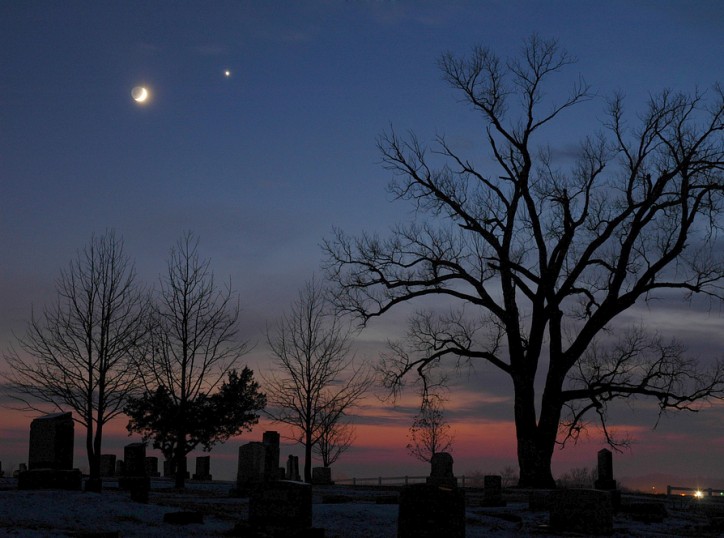
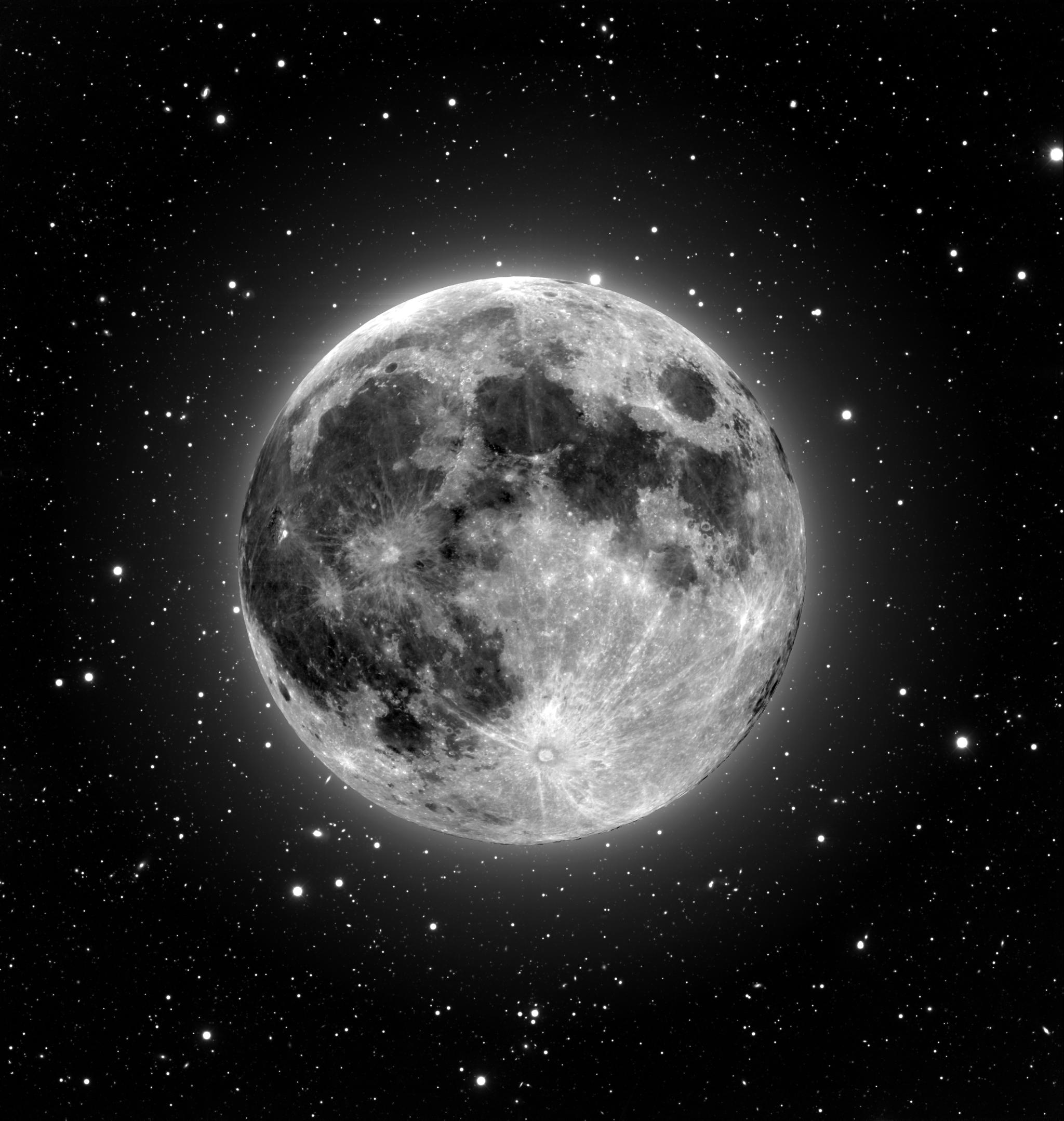
{The moon and stars looking ready for a night out. Image found on NASA's "Astronomy Picture of the Day" website.}


Back To Top
Abstract

The poem begins like so many days: with the dawning of the sun as a stand in for love.

Back To Top
Translation

"When Diana's glassy torch rises late
And is kindled by her rosy brothers,
A pleasant breath of wind lifts
the etheric cloud from all couples;
Thus she softens emotive power
And immoveable hearts, which
Towards the pledge of love she sways."
("Dum Diane vitrea" Stanza 1)

Back To Top
Recordings

Since this is a poem, it will be recorded as a whole and then posted as a whole once it's been completely translated. Once that happens, and all of the individual stanzas have been posted, an entry will be dedicated to looking at the poem as a whole. This entry will also include a complete recording.

Back To Top
Liminal Evening

What is "Diana's glassy torch"? Is it the final light of evening? Or is it the way that the sun reflects from the curvature of the earth so that we can still see some light even though the sun's already set. Whatever it is, it makes it clear that this stanza is about a liminal moment.

That is, this moment is one between two set, concrete points of time - the day and the night.

Yet, even with this stanza's liminality established, what is it that causes this cloud that's apparently settled over couples to lift?

As far as can be told from this stanza, it's just the switching over from day to night.

The most relevant aspect of this transition seems to be that it's a move from the outward show of day toward the private and unknown night.

The reference to Diane's mysterious brothers (or allies, "fratris") supports this interpretation, after all, only when night has fully arrived do the stars emerge.

And that's just what her brothers are - the stars.

Back To Top
Sister to the Stars

For, Diane is the moon and her glassy torch is the moon as it sheds its pale light, so her rosy allies are the stars. Why they're described as being rosy is unclear, unless it used to have a meaning along the lines of self-luminescent. A person with rosy cheeks is usually blushing, and a rose itself is red - a colour that is vibrant enough to pull in human attention.

With all of that out of the way, just what is the cloud that settles over couples?

Back To Top
Lifting the Cloud of Unloving

Since this cloud is dispelled as the moon rises and the stars come out, it sounds likely to be the troubles of the day. The moon, accompanied by the stars gives such a different atmosphere that it changes the context of perception and allows people to forget their troubles.

Perhaps, along with factors of wealth and work, this is also why palour was sought after among women in classic ideas of beauty - just as Diane's pale light could inspire lovers to come together, so too could the palour of a young woman be considered a palliative against the troubles of the day. Maybe such paleness was also important because it helped to wash away whatever troubles a husband/lover experienced in the public sphere.

Th public/private binary is definitely an interesting thing to apply to this poem since it already invokes the binary of night and day (through implication), but it's also problematic.

Medieval life wasn't exactly one that leant itself to privacy - walls were thin, roads were narrow, and small towns banded together not to be cliquey and such, but because it was necessary for survival and protection.

As a result, private/public would be better represented as public/less-public, in that at least around the house (most) people wouldn't be intentionally watching you.

Back To Top
Closing

Next week's stanza continues along the way of love and calls on a lot of night imagery, so perhaps we'll see all of these ideas come into play again then. In the meantime, leave your own thoughts in the comments, and watch for Beowulf's final farewell on Thursday.

Back To Top

Tuesday, August 14, 2012

Fortune Beguiled? ["O Fortuna," Third Stanza] (Latin)

Abstract
Translation
Recordings
Final Notes
Sorrow maybe made Joyous
Closing

{Lady Fortune likes to greet those she favours with a fist bump - for obvious reasons. Image found on Doctor Michael Haldane's Translation Homepage.}


Back To Top
Abstract

The poem's speaker finally gives in under the crushing weight of Fortune, and laments, calling all others to join him.

Back To Top
Translation

Ah Fortune, you do invert
My health and my power,
Ay do you torture me with desire and weakness.
Now without hindrance let us strike
The chord in time, lament loudly with me,
For Fortune foils even the fortunate.
("O Fortuna", 3rd stanza)

Back To Top
Recordings

Latin:

{Forthcoming}

Modern English:

{Forthcoming}

Back To Top
Final Notes

Once more, the translation above is not entirely literal - but that's just not my modus operandi.

Though the most altered line is the final one. Not that the original Latin ("quod per sortem sternit fortem") doesn't come out to something similar when translated literally, word for word ("which by fortune overthrow the strong"). It's just that the above translation dwells less on the words of the original and attempts to delve more into the sense of those original words.

The basic idea is that Fortune treats everyone equally, regardless of their merits. What better way to express that in English than to match "Fortune" with "fortunate"? Plus, though not necessarily a quality in thirteenth century Goliardic poetry, the alliteration is also very English.

Back To Top
Sorrow maybe made Joyous

Now, although this poem ends on a pretty down note, one phrase is curious. In the original Latin it is "mecum omnes plangite," in the above translation it's "lament loudly with me." What's interesting here is that, though it's framed by the sorrowful "lament" the speaker calls for everyone to come together to lament Fortune's tyranny.

But, what usually happens when a bunch of people get together (even medieval people)? A cracking party ensues - of one sort or another.

So it might be something that's coming from looking a little too deep, but including the call for everyone to come complain with him suggests that the speaker is aware that Fortune is not the only thing that runs in cycles.

It could be that he's trying to start some kind of spirit boosting gathering, even if it's just a bunch of monks getting together and moaning about their misfortunes. Unless they're all Dominicans, chances are one will tell a joke or relate a misfortune that another will chuckle at, and things will go up from there.

Or, of course, they'll reason that this Fortune stuff is all pagan nonsense and go off to read the loose-parchment copies of the story of Christ jousting against Satan that they've hidden in their bound books of theology.

Back To Top
Closing

Come Thursday, Wiglaf is in the dragon's hoard and does some hoarding of his own - while the poet ornaments his tale with a brief meditation on the dragon.

Back To Top

Tuesday, August 7, 2012

Fortune Bemoaned ["O Fortuna," Second Stanza] (Latin)

Abstract
Translation
Quick Notes
Fortuna's Subtlety
Translating Poetry can be Torturous
Closing

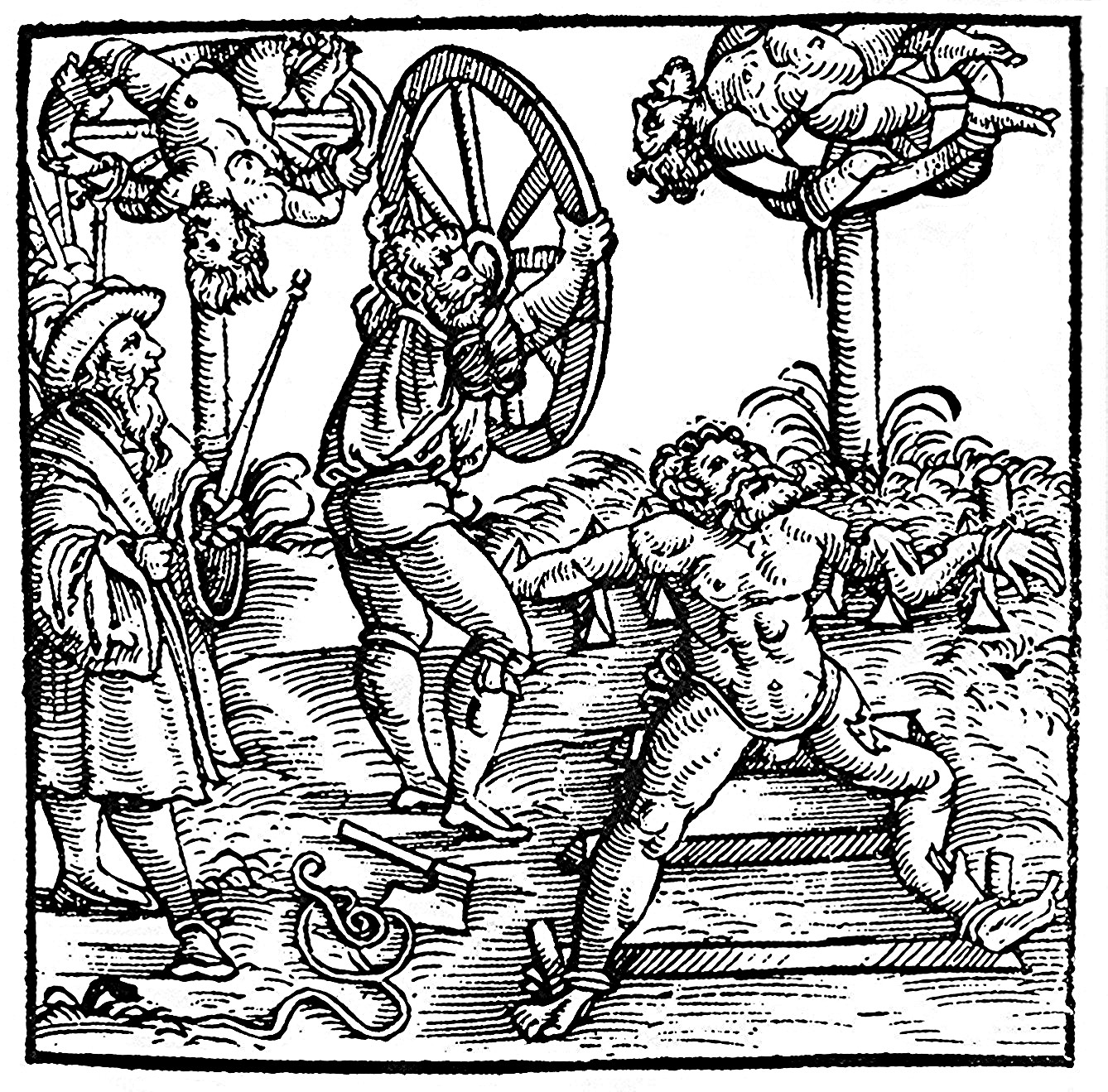
{Another of Fortune's wheels? Image found on Wikipedia.}


Back To Top
Abstract

The speaker further builds on his complaint against Fortune.

Back To Top
Translation

"Ah, Fortune, vast and void,
On your spinning wheel idle health ay turns to bad standing;
Both ever dissoluble, viewed but darkly,
Yet always to me seeming vainly lovely
As you bring your laughing, desecrating lash
To my naked back."
("O Fortuna", 2nd stanza)

Back To Top
Quick Notes

If you look at the translation offered on Wikipedia, and then at the one that I present here you'll probably notice some differences. Once more, they've been made to keep the medieval flavor of the poem more or less intact.

Line 4 might be going a bit too far with its phrasing, but nothing was ever said about the poem's original flavor being mild.

Back To Top
Fortuna's Subtlety

In fact, torture is clearly at play here. The wheel as a torture device was used in the middle ages, and the poem was written right in the middle of this period, sometime in the thirteenth century. But even then, there're the final two lines of the stanza that explicitly mention a "laughing, desecrating lash" (ludum, ) that is brought to the speaker's "naked back."

There's really no question that torture imagery is at play here. This might even be building on the subtle dominance of women peeked at in the first stanza of the poem.

Though they lacked prominence in places of power, their influence, however subtle and unseen in history books, cannot be overlooked. Even through to today, women who are villains (and even heroines) more often than not work their schemes through wit and wiles rather that brawn and brawling.

The binary stereotype that men are strong and women are smart (though usually not book smart) has persisted for a long time, and "O Fortuna" definitely looks like a medieval manifestation.

Back To Top
Translating Poetry can be Torturous

Although it might be a unique variation, what does it mean for the sort of torture imagery here (variably the breaking wheel, and fortune's laughingly lashing a person's back or taking her "pleasure" ("ludum") on a naked back ("dorsum nudum"))?

The Latin word used for "laughter" or "pleasure" is "ludum." This word refers to things like laughter, play, jests, or just a generally fun, interactive time. So how does that relate to being whipped?

On the one hand it could be a bit of the repressed seeping through. In the middle ages those who could write and had the means to do so were trained by the Church. So, it could be that the whip is "laughing" as well as "desecrating" because it injures the body that god created while also relieving the pent up desires that that body has through taking on pain: a feeling as extreme as pleasure.

On the other hand, the above translation does take some license in coming out with "As you bring your laughing, desecrating lash/to my naked back." The poem in Latin reads "...ludum dorsum nudum...," all three of those words are together, but it's not entirely clear what's doing what.

If they all create a single direct object phrase (since they are in the accusative case), then any order could be used. "Laughing naked back," "back laughing naked," "naked back laughing." Even if any of these are used, the element of fun remains in the act of torture.

The only real change in meaning that results from these variations is that the laughter's moved from the whip to the speaker's back: the gashes opened by the whip being likened to the open mouth of someone laughing.

In either case, this is definitely a poem that has more going on than another, more pious piece translated earlier.

Back To Top
Closing

Check back here on Thursday when Wiglaf views the hoard for the first time, helped by the luminescence of a battle standard.

Back To Top